How to Fold Clothes Fast and Efficiently
Shopping links: These links open Amazon search results. They are optional browsing suggestions, not verified product reviews or price/availability checks.
A folding routine for the clothes you actually wear
Choose a small amount of clean, fully dry laundry and a clear place to put it away. Efficient folding is about a method you can repeat, not racing a five-minute timer. This guide does not claim a measured time saving, crease prevention or a named creator’s exact technique. Check the care and storage needs of each garment before applying a general fold.
Prepare a stable, reachable surface
Use a clean surface with enough room for one garment. Sit or stand in a position that works for you, and leave the walking route clear. Avoid a tall, unstable pile or a basket so full that it blocks your view while carrying it. Do not use a running appliance or cover vents and controls as part of a folding station. You can stop after a few items if that suits the day.
Group by the next action
Separate items that need hanging, folding, a repair or a care check. Do not put damp laundry directly into a packed drawer. Keep special-care and delicate pieces separate until you know their requirements. Sort finished garments by the person or storage area they belong to if that avoids carrying the same pile around repeatedly. There is no requirement to fold every small item or to use a separate basket for each category.

Try one T-shirt before repeating the fold
Lay the shirt flat, gently smooth it and fold each side inward with its sleeve to create a rectangle. Fold the lower section upward in one or more sections to suit the drawer or shelf. Avoid stretching the fabric to create perfectly aligned edges. Put the trial shirt in its destination and check that it fits without cramming before folding the rest of the pile the same way.
Adapt trousers to their fabric
Lay the trousers flat and align the legs, then fold one leg over the other without pulling seams out of shape. Fold the length in sections sized for storage. This can leave folds; it does not guarantee crease-free trousers. For a structured garment, deliberate crease or special finish, follow its care guidance and consider hanging instead. Keep bulky items from crushing more delicate pieces underneath.
Handle dress shirts and special garments separately
A casual folding method may not suit every shirt. Follow the garment’s care instructions and choose hanging when that is more useful. If folding is appropriate, lay the shirt flat, arrange sleeves and sides without sharp strain, then fold to the required storage size. Smoothing by hand is not a substitute for any suitable wrinkle treatment you choose later. Do not apply heat without checking the label and appliance directions.
Compare a short stack with an upright row
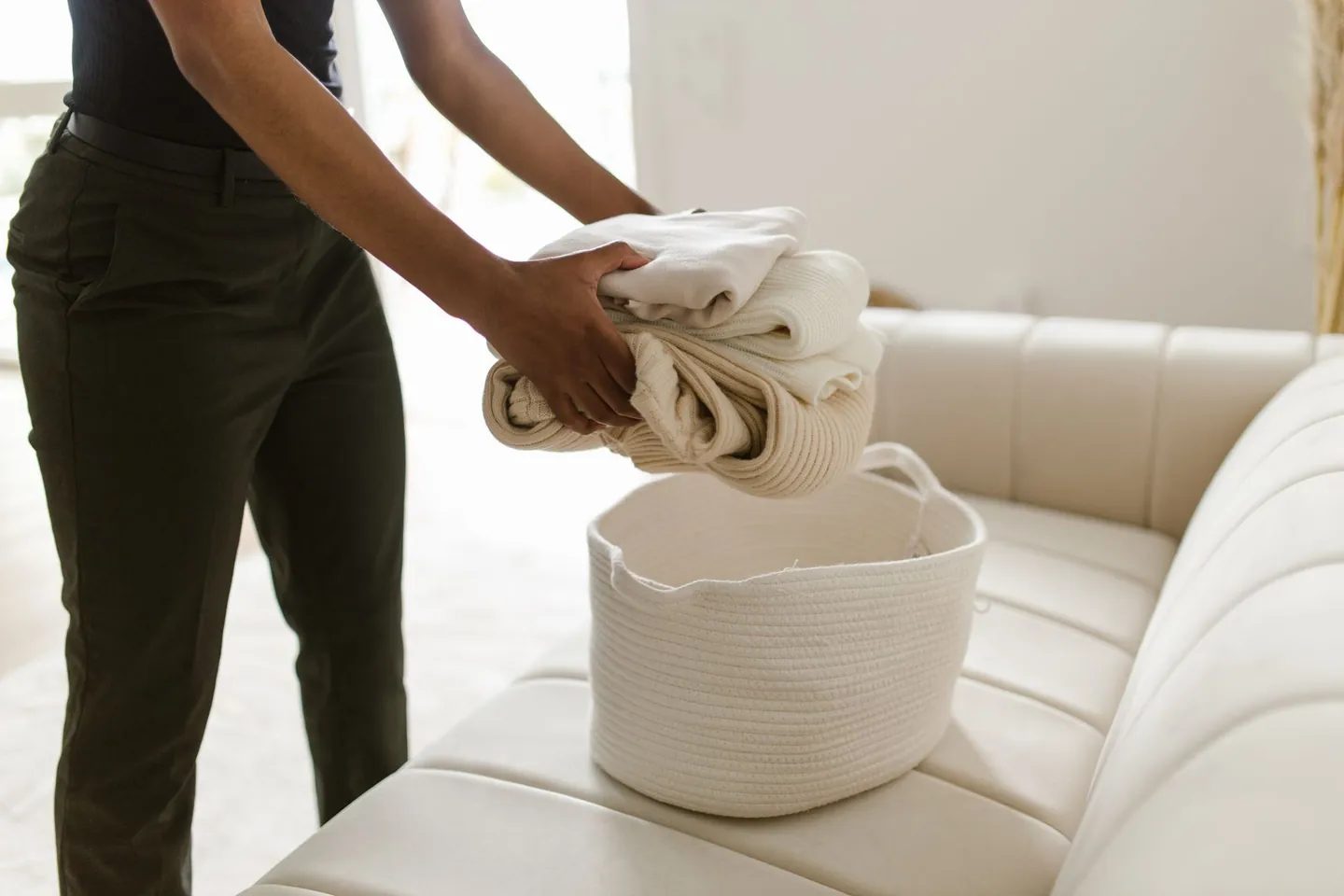
Try the arrangement that lets you remove and replace an item easily. Upright storage can help show what is in a drawer, while a shallow stack may fit a shelf. Neither is automatically more compact. Leave enough room to use the drawer normally, and follow the furniture’s load limits. A folding board is optional; check that it suits the garment and your ability to use it rather than assuming it will speed every session.
Use a pause point instead of a competition
If you like a timer, use it to remind yourself to put the finished clothes away and clear the surface. Do not rush lifting, appliance handling or special-care steps to beat it. Ask a willing helper to sort or return clothes using a shared plan, without expecting a fixed reduction in time. It is fine for two people to use slightly different folds when the storage still works.
Finish without adding unnecessary equipment
Put away the completed items and leave anything needing attention in a clear, manageable place. Keep detergent and laundry packets in original labeled packaging, locked away and out of children’s sight and reach. The retained sorter, drying-rack and detergent-storage links are optional searches, not reviewed products or required equipment. Try the routine with what you own, then consider a purchase only if a specific gap remains.


