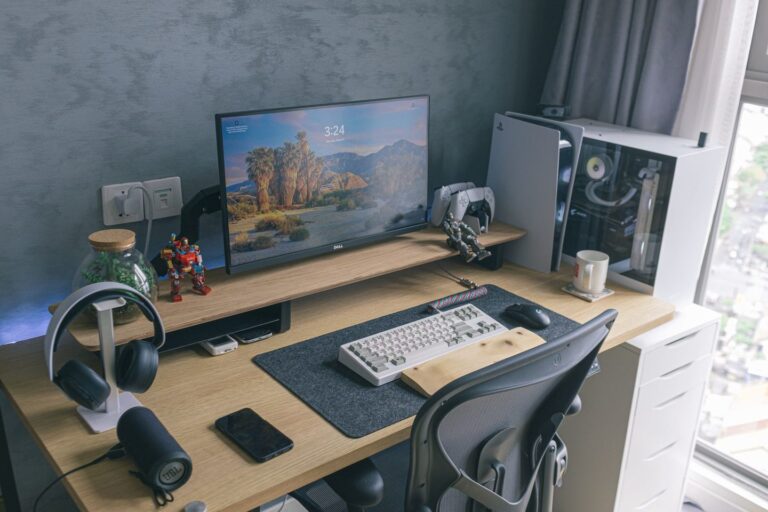
Home Office Organization Ideas
A home office works when the layout suits the way you work and the clutter has nowhere to hide. These ideas focus on function first, then style.
Disclosure: These links open Amazon search results. They are optional browsing suggestions, not verified product reviews or price/availability checks.
Plan a functional layout

Keep what you use most within arm’s reach and the rest further away. Position the desk to avoid screen glare and to use available light. Leave space to move and stand.
Storage that matches the room
Choose storage you will use, in colours and materials that suit the room. Drawer trays, shelves and a few boxes are usually enough. Fancy organisers can become clutter, so pick function over style.
Sort paper and go digital
Colour-coded folders can help with paper. Scanning documents and storing them in a cloud service or on a drive reduces paper, but use a strong unique password, two-step sign-in and a separate backup. Keep originals of documents that must be kept in paper form.
Use the walls
Shelves, hooks and a pinboard hold items off the desk. Anchor shelves into the wall properly and keep heavy items low.
A daily reset
Spend five minutes at the end of the day returning items, clearing the desk and noting tomorrow’s tasks. A routine does more than a big yearly clean-up.
Personalise
A plant, a photo or a piece of art helps the room feel like yours, so long as the desk stays workable.
Boundaries in a shared home

If the office is also living space, set a clear end to the working day, put work items away, and use a screen or cabinet to hide equipment.
Desk setup basics
Place the screen about an arm’s length away and at a comfortable height, with the keyboard and mouse close to the body. A supportive chair and a footrest if needed can reduce strain. If you have pain or a health condition, ask a qualified professional about your setup. Regular short breaks to stand and move are widely recommended.
Cables and power
Use cable clips or a box to keep cords tidy, and do not overload a power strip or cover it in a way that traps heat. Check that cords are not in walkways. Choose a surge-protected strip if it suits your equipment, and unplug devices you are not using for long periods.
Paper and a simple inbox
Use one inbox tray for new papers, and empty it on a set day. Sort items into act, file or recycle. Keep only the documents you need to hand, and store the rest in a labelled box or scan them.
Make it stick
Choose one small habit to start, such as clearing the desk at the end of the day, and add another only when the first feels easy. Systems that are too elaborate rarely last.
Questions people ask
What is the first step?
Clear the desk and decide what truly belongs there.
How can cables be tidied?
Use clips, ties or a cable box, and avoid overloading power strips.
Do colour codes work?
They help some people. Keep them simple.
Amazon category searches
Optional browsing links. Check the specific listing, dimensions, materials, instructions, and current terms before buying.