How to Make the Most of Your Dresser Drawers
Shopping links: These links open Amazon search results. They are optional browsing suggestions, not verified product reviews or price/availability checks.
Get more useful access, not a fuller drawer
Making the most of a dresser is about reaching and returning clothing without forcing the drawer or unpacking a pile. It does not mean using every spare centimeter. Choose one drawer and one ordinary routine to improve, such as finding a clean top or putting socks away. This guide offers methods to compare, not a tested space-saving formula or a promise about stress. Keep the bed and floor usable while you work through the contents.
Start with furniture condition and instructions
Check the dresser’s assembly, load limits, drawer stops and required anchoring. Use appropriate fixings and obtain any needed property permission rather than treating anchoring as optional because the dresser feels heavy. Keep children from climbing on drawers. Do not place a desired toy or device high on the dresser where it may encourage climbing. If a runner, fitting or support is damaged, deal with that problem before adding containers or changing the load.
Review clothes without a love-it-or-lose-it rule
Separate garments by owner and purpose. Some useful clothing is kept for occasional work, weather or events rather than frequent wear. Put uncertain items aside for the owner to review and distinguish repairs from items already cleared to leave. Do not donate borrowed clothes or shared belongings without agreement. A photograph may be useful as a record, but it does not have to replace something sentimental. Check a recipient’s current acceptance requirements before arranging a donation.
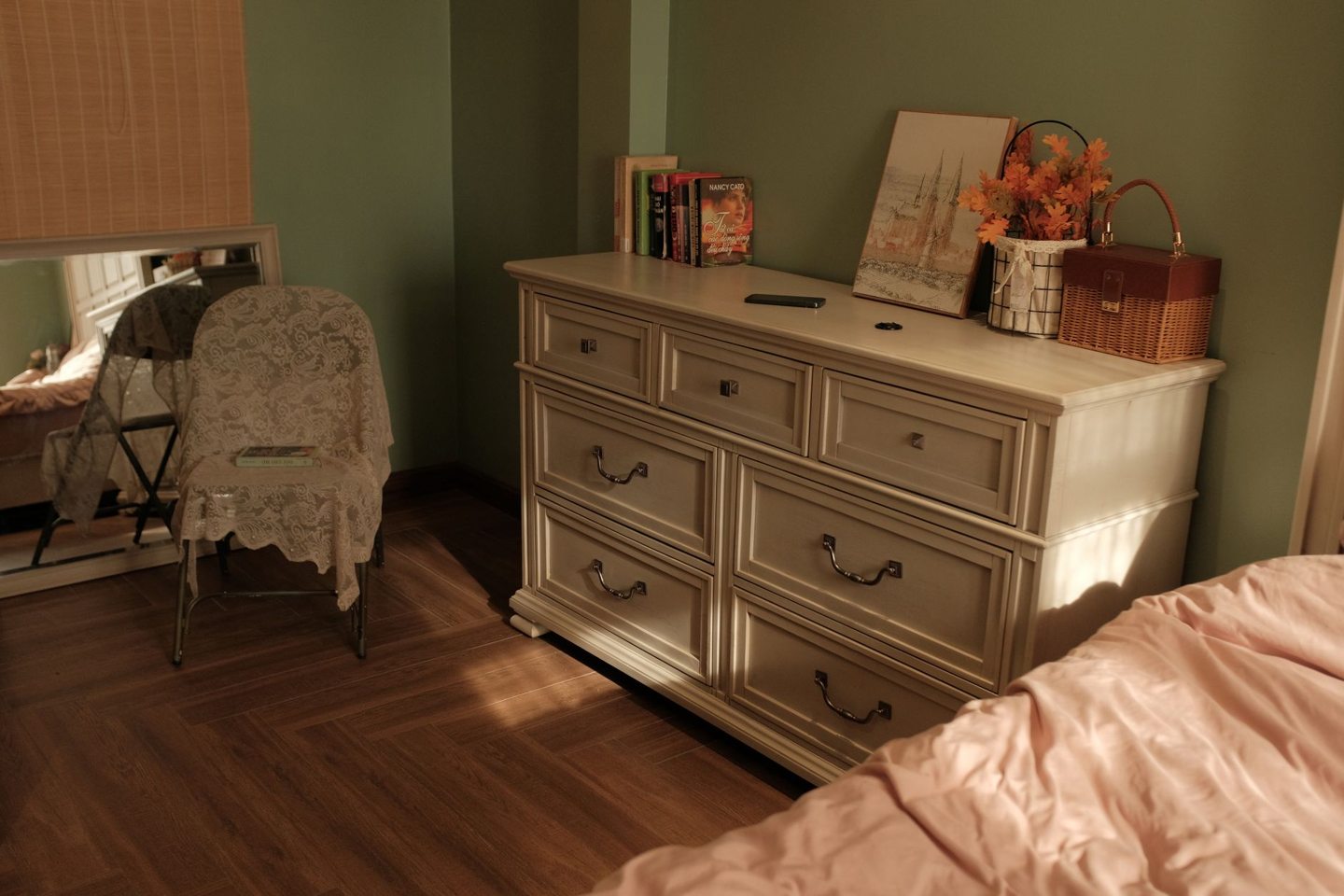
Try short stacks for suitable garments
Flat stacks can work when the drawer is shallow and you can reach each item without disturbing the rest. Keep them low enough to stay below the closing path. Follow garment care instructions rather than pressing everything into the smallest possible rectangle. If the bottom item is consistently hard to retrieve, reduce the stack or try another arrangement for that category. There is no need to use a named folding method simply because it is popular.
Try upright rows where visibility helps
For garments that tolerate folding, an upright row can let you identify an item without lifting a stack. Test a few pieces first, checking that the drawer closes freely and that fabrics do not catch. A small existing box may support a short row. Do not force tightly rolled or folded delicate items into a narrow compartment. Keep the method only if you can repeat it when putting away ordinary laundry, not just during the first tidy.
Use dividers as boundaries, not extra capacity
Measure the usable drawer width, depth and height before choosing an insert. Leave runners and closing clearance unobstructed. Small sound boxes may separate socks or accessories without buying anything; rough or weak containers can snag fabric and create another problem. Do not wedge a divider tightly enough to strain the drawer. An organizer cannot increase a drawer’s permitted load or repair worn hardware. Leave room to take items out with a normal hand movement.
Skip the generic turntable hack
A kitchen turntable is not automatically suitable inside a dresser drawer. It needs enough opening and rotation space, a stable base and a load compatible with both the tray and drawer. For ordinary clothing, a shallow section often uses the space more simply. Do not buy or adapt a rotating platform solely because it is called a storage solution. Try what you already have and choose the least complicated arrangement that keeps the actual category accessible.
Plan reach and weight together
Put everyday clothing where the user can reach it comfortably within the furniture’s loading instructions. An accessible top drawer is not a reason to move all heavy belongings there. Avoid hidden layers that require lifting several full boxes to get dressed. Store occasional garments somewhere suitable and label the location if needed. Keep the floor around the dresser clear so drawers can open and the user can stand or move safely in front of them.
Keep clothing storage separate from hazardous small items
A miscellaneous drawer can quietly collect medicine, batteries, magnets and sharp tools. Move those to appropriate storage according to their labels, intended use and who can access the room. A divider or picture label is not a child-resistant barrier. Keep private records out of open clothing storage when others share the dresser. Agree categories with the people using them rather than labeling someone else’s belongings or changing their system without asking.
Check the result after laundry day
Use the layout through one normal clothing cycle and note what does not return easily. Reduce the number of categories or change a fold before adding another insert. Seasonal rotation can help only when the alternative storage is clean, dry, suitable for the garments and easy to identify. There is no automatic purge deadline. Retained shopping links are optional category searches, not tested products, checked prices or proof that an under-bed bin or bedside caddy solves a dresser problem.