Organizing Your Closet: Tips for Efficient Use
Shopping links: These links open Amazon search results. They are optional browsing suggestions, not verified product reviews or price/availability checks.
Organize the closet around what you need to reach
A useful closet lets you find, remove and return clothes without unloading the whole space. Start with one problem, such as a crowded rail or a drawer that will not close. You do not need to empty everything onto the bed, replace all the hangers or follow a fixed clothing limit. This guide offers a practical sorting method, not guaranteed savings or longer garment life. Clothing care and storage suitability still depend on the individual item and its instructions.
Work through one manageable section
Choose a drawer, part of a shelf or a small rail section. Use a clean nearby surface and leave the bed and walking route usable if you need to stop. Sort into keep here, return elsewhere, repair or care, owner review and possible disposal. Inspect pockets and folded items before anything leaves. Discuss shared belongings with their owners. Not wearing something for a year, or not loving its color today, is not by itself a reason to give it away.
Keep clothing decisions separate from a display standard
Consider current activities, fit, comfort, occasional use, climate and any meaningful reason to keep an item. Clothes for changing body sizes, ceremonies, work requirements or emergencies may need a different home rather than disposal. If uncertain, label a review group and set a time to consider it properly. Check a donation service’s current acceptance rules before taking items there. Do not assume damaged clothing belongs in a donation bag or that an online listing will necessarily sell.

Use categories that match getting dressed
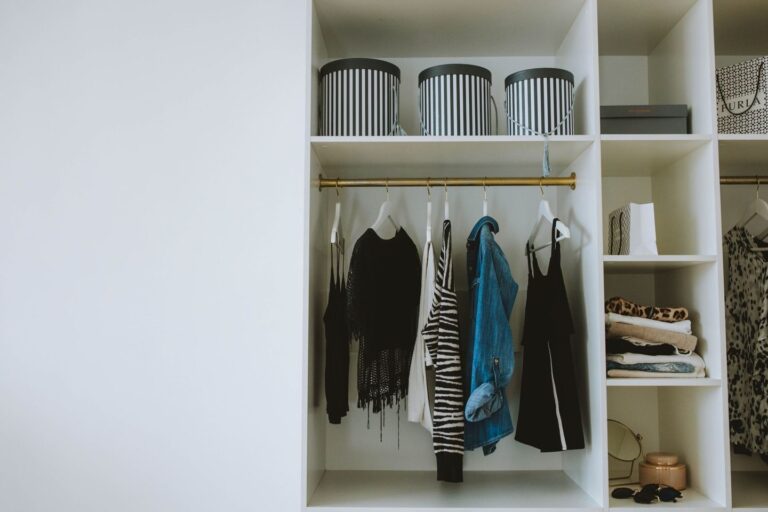
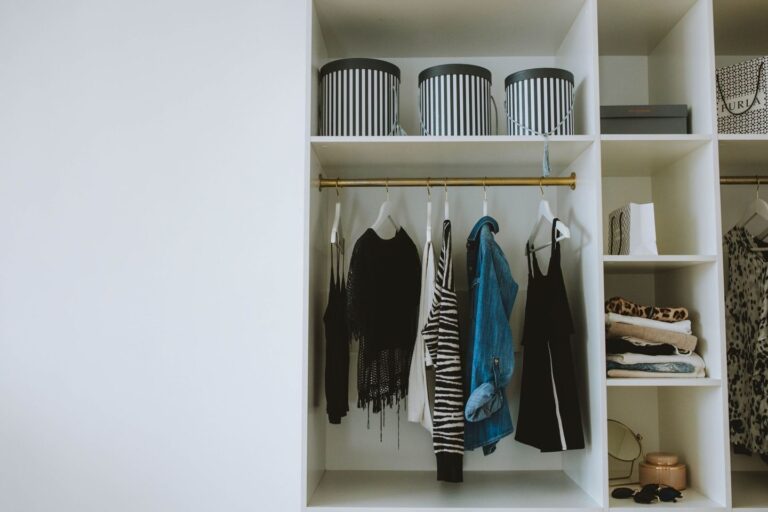
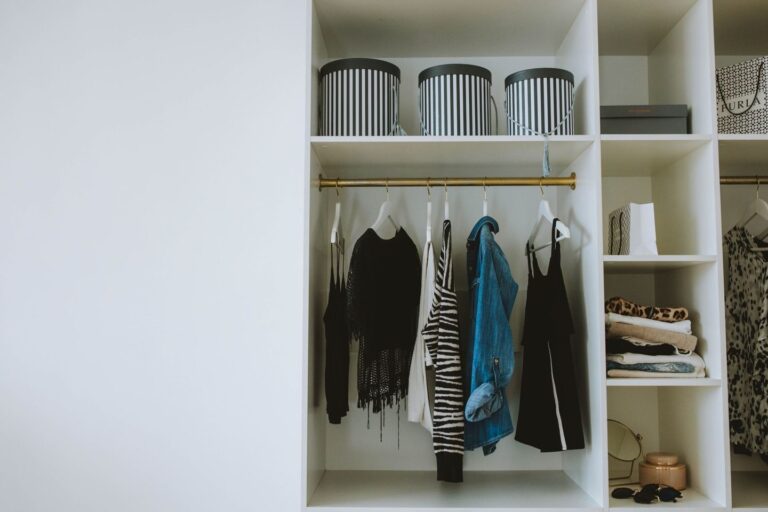
Group items by how you look for them: activity, garment type or complete outfit. Color order is optional and may not be the easiest system for every user. Keep frequently used items within comfortable reach. Fold or hang according to the garment’s care and storage needs rather than applying one method to every knit or delicate item. Leave enough room to remove a hanger without dragging neighboring clothes off the rail. A matching set of hangers is not necessary.
Check the rail before adding more weight
An extra rod or hanging shelf does not automatically double usable capacity. Check the existing structure, mounting, load limits and the proposed accessory’s instructions before adding it. Avoid improvised soda-can tabs linking hangers: use only a suitable purpose-made accessory if the whole arrangement is compatible. Hooks and door organizers also need appropriate fixing, loading, clearance and any rental permission. If you cannot establish those conditions, use existing storage differently instead of treating the unused height as a job to fill.

Keep shelves and floor storage stable
Place heavy containers low enough to retrieve without unsafe lifting. Do not climb on furniture to reach an upper shelf. Leave the closet door and nearby room routes usable. A shoe rack needs to fit the actual footwear and floor space; stack it only as its instructions allow. Follow furniture anchoring instructions, especially around children, rather than assuming a small or neatly packed unit cannot tip. Keep small accessories, batteries and hazardous items appropriately secure instead of mixing them into a child-accessible tray.
Rotate only what is genuinely out of use
A coat may still be useful in a cool workplace, on a trip or during unusual weather even when the local season changes. Keep a small practical selection accessible. Store other garments clean and fully dry using their care instructions. Check whether compression is permitted for the exact item; vacuum bags are not a universal choice or a freshness guarantee. Measure storage space and leave room to retrieve the container. Do not put away damp clothes or ignore signs of moisture or pests.

Improve visibility without crowding equipment
Try arranging existing items so labels and shelf edges can be seen. If adding a light, choose one intended for that location and install it according to its instructions, including clearance from clothing and any battery-access precautions. Do not put a hot fitting against fabric or run a lead where a door can pinch it. Secure spare batteries away from children. Replacing fixed electrical fittings is separate electrical work, not a casual closet-organizing step.
Maintain the smallest system that works
Return clothes after use and keep repairs in a clearly identified place rather than letting them disappear into the rail. Review the category that repeatedly overflows before buying more organizers. If you do need something, measure both the item and the storage opening, check loading and care, and review return terms. The retained shopping links are category searches, not verified fit or quality recommendations. A successful closet is usable for its household even when its hangers and containers do not match.
Retained links and sources
- Optional Amazon category search: Velvet Hangers
- Optional Amazon category search: Shelf Dividers
- Optional Amazon category search: Shoe Rack
- Easy Closet Organization Ideas for Small Spaces
- How to Declutter Clothes in 5 Simple Steps
- Shoe Storage Ideas for Small Space Living
- CPSC: secure storage and furniture anchoring