Deep Clean Kitchen: A Before-and-After Checklist
This is an illustrative before-and-after kitchen cleaning guide, not a report of the author's home, a documented makeover, or a tested result. The 'before' is a hypothetical kitchen with crowded counters, greasy touch points, and poorly grouped supplies. The intended 'after' is a usable preparation area with clean surfaces and an easy maintenance routine. Results will depend on the kitchen's condition, materials, and time available.
Disclosure: These links open Amazon search results. They are optional browsing suggestions, not verified product reviews or price/availability checks.
Define a useful before and after

Choose practical goals rather than a magazine-style finish. Examples include clearing one preparation surface, finding the right pan without moving a pile, and keeping cleaning supplies together. If taking your own comparison photos, use the same angle and avoid moving clutter just out of view.
List any problems that cleaning cannot solve, such as a leak, damaged seal, loose cabinet, or persistent mold. Arrange appropriate repairs or specialist advice rather than covering them with a new liner or organizer. A clean-looking surface is not proof that an underlying problem is fixed.
1. Clear one area without emptying the whole kitchen
Move unrelated papers and household items to their proper homes. Remove unused gadgets, damaged utensils, and duplicates that do not serve a purpose. Set aside clean, usable donations according to the recipient’s rules.
Work through one counter section, shelf, or drawer at a time so there is room to prepare food later. Keep a clear route through the room. Do not leave perishable food on the counter while sorting cabinets.
2. Dust high surfaces and wipe touch points
Remove loose dust before washing surfaces below it. Clean accessible shelf tops, cabinet fronts, handles, and backsplashes with methods suitable for their materials. Use a stable, appropriate step stool rather than standing on a chair, and leave high or awkward work for someone equipped to do it safely.
Switch lights off and allow fixtures to cool before cleaning. Do not spray liquid into switches, outlets, appliance controls, or vents. Use a well-wrung cloth where appropriate and dry finished wood or cabinet joints promptly.
3. Clean appliances in a safe sequence
Follow each appliance manual. Let cooking equipment cool, remove loose crumbs, and use only compatible cleaning methods. Protect heating elements, controls, and electrical parts. An oven cleaner or self-cleaning cycle must be used according to its own directions, not a general internet shortcut.
Clean the refrigerator a section at a time while keeping food cold. Wash removable pieces as permitted, and take care with temperature changes that could damage cold glass. Clean the microwave turntable and interior according to its manual; heated liquid and steam can cause burns.
4. Give pantry items clear homes
Group grains, canned goods, baking supplies, and snacks according to your cooking habits. Put frequent-use items within comfortable reach and reserve higher shelves for light, occasional stock. Bring older suitable food forward when adding new purchases.
Clear food-contact containers are optional. If decanting, retain the food name, relevant ingredient and allergen information, storage directions, and dates. Do not use a matching jar to disguise stock with an uncertain identity or condition.
5. Reset the sink area
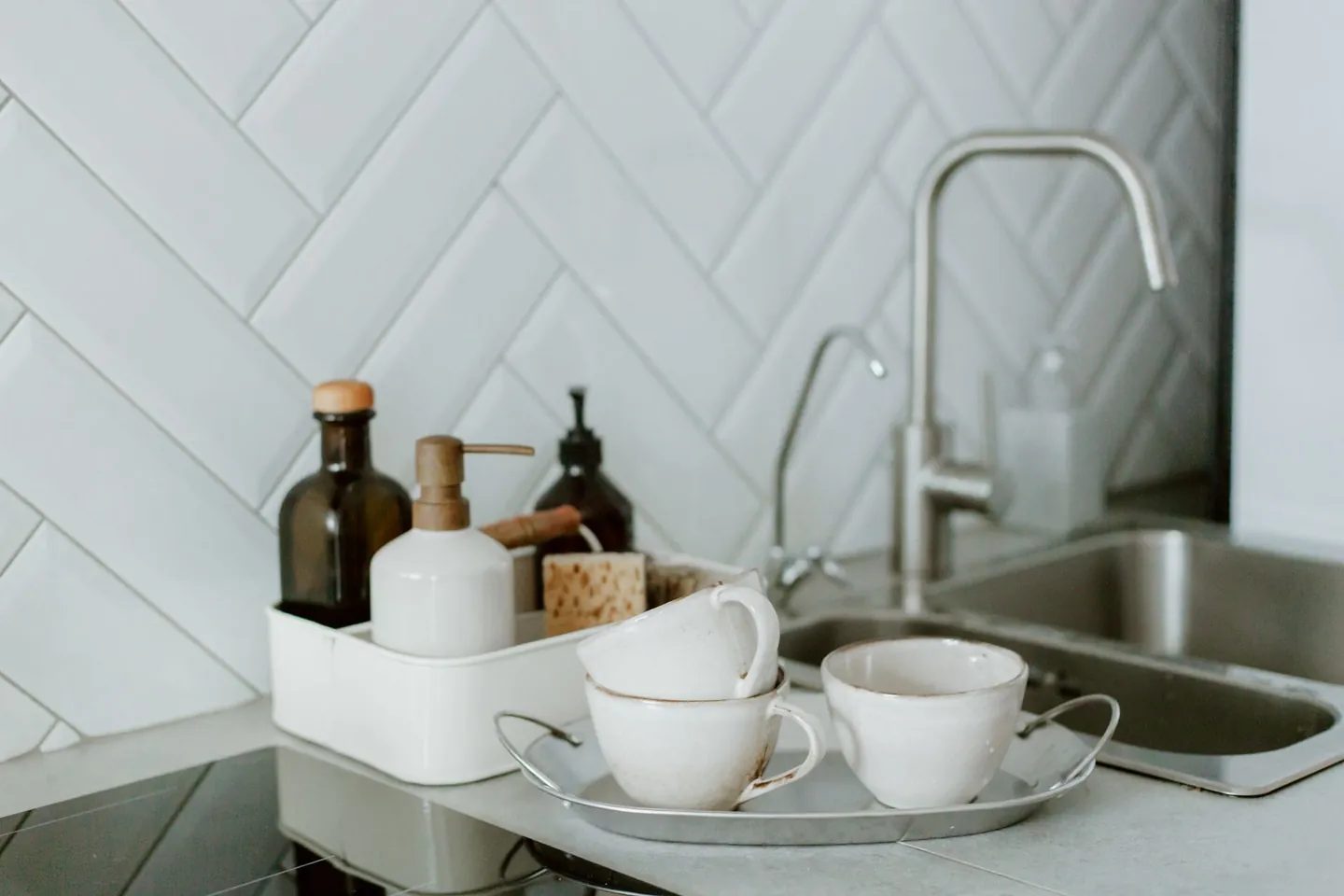
Wash dishes, remove trapped debris where safe, and clean the sink and faucet with products approved for their finish. A dish rack should fit without obstructing the main work area and should be cleaned and dried regularly.
Keep under-sink supplies in labeled original containers, separate incompatible products, and leave valves and plumbing accessible. A removable caddy can help with daily supplies, but the cabinet must remain child-safe. Never mix vinegar, bleach, ammonia, or other cleaning products.
6. Finish with the floor
Sweep or vacuum loose debris before mopping. Follow the flooring manufacturer’s guidance for water, steam, and cleaning products. A steam mop is not suitable for every floor, including some materials or installations that can be damaged by heat and moisture.
Clean grout only with a compatible method. Avoid sprinkling powders over rugs or into a vacuum unless both manufacturers permit it. Keep the route clear and allow the floor to dry before putting mats and furniture back.
7. Refresh textiles and simplify tools
Wash dish towels, cloths, table linens, and washable mats according to their care labels. Dry them properly before putting them away. Replace damaged protective items such as pot holders when they no longer do their job; stained but sound cloths do not automatically need replacing.
A small set of suitable cloths and brushes may be enough. Keep tools used for contaminated or very dirty areas separate from food-preparation cleaning. Multipurpose does not mean one brush should move indiscriminately between dishes, floors, and drains.
8. Maintain the result with shared tasks

Assign age-appropriate tasks if several people use the kitchen. An adult should handle hot equipment, sharp tools, and chemicals. Build the routine around actual use: clean food spills promptly, wash dishes, check stored food, and add deeper tasks when needed.
If disinfecting is called for, clean first and follow the disinfectant label, including surface compatibility, wet contact time, and any food-contact rinse. Neither a quick wipe nor a pleasant smell proves disinfection.
What to compare in the optional product searches
Check cloth care, brush stiffness, cleaner dilution, and surface compatibility. These are broad searches rather than verified product reviews. The useful ‘after’ is a kitchen that works safely in daily life, not a reason to buy a complete new cleaning kit.
For cleaning and disinfection basics, see CDC’s home cleaning guidance.
Amazon category searches
Optional browsing links. Check the specific listing, dimensions, materials, instructions, and current terms before buying.