Deep Cleaning Checklist for Every Room in Your Home
Shopping links: These links open Amazon search results. They are optional browsing suggestions, not verified product reviews or price/availability checks.
A room-by-room cleaning plan with clear limits
Use this checklist to divide a large job into manageable parts. It is not a promise to sanitize every room, remove all allergens or improve a medical condition. Choose one room or a few tasks, check the relevant care instructions, and stop when you need a different product, safe access or professional help.
Prepare before opening products
Clear a safe route, gather the tools you already have and read product labels. Use only methods suitable for the material. Follow ventilation and protective-equipment directions. Keep cleaners separate, in their original labeled packaging, away from children and pets. Never combine chemicals or add another cleaner to residue from an unknown treatment.
Living room: surfaces, textiles and electronics
Remove items that belong elsewhere and dust reachable surfaces without standing on furniture. Vacuum floors and upholstery using the methods their care instructions permit. Check upholstery care codes before spot treatment. For televisions, remotes and other electronics, use the device maker’s instructions for shutdown, unplugging and cleaning. Do not spray liquids into a device or use a general glass cleaner on a screen.

Kitchen: work around the material and appliance
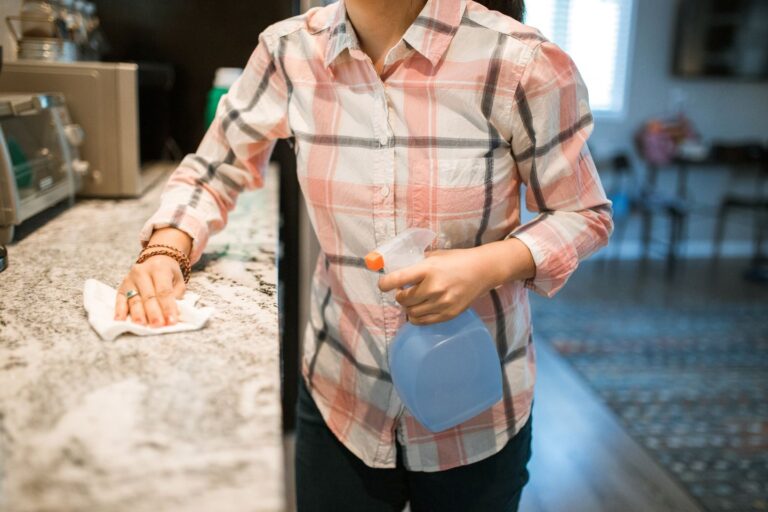
Clear one section of counter, clean it with a compatible method and return only the items you need there. Follow each appliance manual for interior cleaning, cooling, disconnection and removable parts. An oven, microwave and refrigerator do not share a universal cleaning recipe. Clean the sink and floor using their care instructions. Follow appropriate food-safety guidance for food-contact surfaces rather than treating a decorative shine as evidence of sanitation.
Bathroom: clean first, disinfect when needed
Use compatible methods for the shower, tub, toilet, basin and fixtures. Keep toilet tools separate and follow each cleaner’s directions, including contact time, ventilation and rinse. CDC guidance distinguishes cleaning, sanitizing and disinfecting. Disinfecting is not automatically needed for every routine task. When appropriate, clean first and use a suitable disinfectant exactly as labeled, keeping the surface wet for its required contact time.
Handle moisture problems separately
A recurring mold patch is not solved by adding stronger mixtures. EPA guidance puts moisture control alongside cleanup. Report leaks and seek appropriate advice for extensive growth, contaminated water, suspected HVAC involvement or health concerns. This ordinary cleaning checklist is not a mold-remediation procedure. Do not paint or caulk over mold to hide it.

Bedroom: labels before heat
Check bedding and mattress-protector care labels before washing. Use detergent and the recommended water temperature, then dry items completely according to their instructions. Do not assume every item tolerates hot washing or that a general wash routine is a verified dust-mite treatment. Put away clothing you want to keep and decide deliberately what to donate, repair or discard.
Home office and finishing checks
Sort papers without discarding records you may need. Clean the desk and chair using their care instructions. Leave device vents clear and handle cables only when it is safe to do so. Finish with floors, dry surfaces where required, put products away securely and wash your hands. Record any task you deferred rather than treating the checklist as proof that nothing was missed.
Optional supply searches
The retained Amazon links are category searches, not tested products. A cloth, brush or concentrate may or may not suit a particular finish or task. Check its instructions, dimensions, dilution and pack size. This guide does not promise streak-free cleaning without chemicals, faster results or a fixed product lifespan.