One Room at a Time Declutter: A Step-by-Step Guide
Shopping links: These links open Amazon search results. They are optional browsing suggestions, not verified product reviews or price/availability checks.
Choose a room, then choose a smaller finish line
One room at a time is a way to limit the number of decisions open at once. It does not mean emptying a room onto the floor or finishing it in one session. Pick a room where a small improvement would make an ordinary task easier, then choose a single surface or drawer. This guide does not claim that decluttering treats stress or improves attention. A usable space is a practical goal on its own.
Start with access, not the most upsetting room
Check that doors open and there is a clear walking route before spreading anything out. If the room feels too difficult, begin somewhere less demanding. A bedside surface or one section of a kitchen counter can be a reasonable first target. Avoid starting with high storage, heavy furniture or private paperwork when time and help are limited. Severe clutter that blocks essential access, pest contamination or unsafe materials may need qualified help rather than a solo sorting session.
Decide what this room needs to do
Write a plain purpose, such as eat at the table or find tomorrow’s clothes. Keep that purpose specific enough to guide choices without declaring everything else unwanted. Shared rooms have more than one user, so agree which area is yours to sort and ask before moving another person’s things. Items needed for disability, care, work or occasional events can earn their space even if they are not used daily. Frequency alone is not a disposal rule.

Set up a few temporary destinations
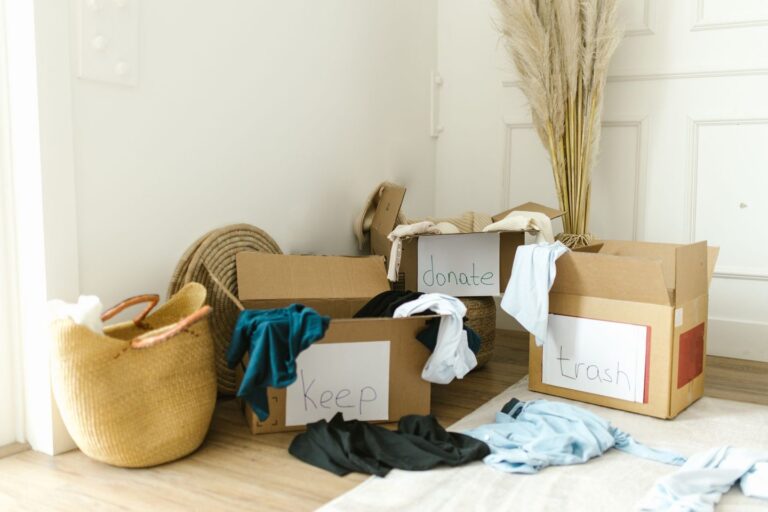
Use existing boxes or clear patches for keep here, move elsewhere, offer onward and decide later. Separate ordinary waste from anything needing a special disposal route. Do not put batteries, medicines, sharp objects or electrical equipment into a generic toss bag. Check local collection and disposal instructions for those items. Keep sorting containers out of children’s and pets’ reach, avoid loose plastic bags around them, and do not block exits with outgoing donations.
Work through one contained section
Take out only what you can put away before stopping. Group similar objects, check what still works, and return useful items to a reachable location. A broken item can need repair assessment, safe disposal or an owner decision, not an automatic trip to the bin. If an object belongs elsewhere, move it during a planned handoff rather than abandoning the current drawer to reorganize the next room. Leave uncertain decisions labeled and contained.
Choose a stopping point that suits you
A timer is optional, and its duration is a personal limit rather than a productivity prescription. Stop earlier if you need a break or help. Before leaving, close drawers, remove trip hazards and make the room usable again. Do not keep working solely because a timer has time remaining. A finished shelf is useful progress even when the rest of the room is unchanged. The important boundary is being able to leave the space safely between sessions.

Treat high shelves and furniture as separate jobs
Top-to-bottom cleaning is not a rule for deciding where to declutter first. Do not climb on chairs or pull down heavy boxes simply to follow an order. Arrange suitable equipment and help for work beyond comfortable reach. Follow furniture instructions for anchoring, keep heavy items low, and do not alter a rental wall without checking the relevant requirements. Sorting a drawer does not require moving a wardrobe, changing electrical fittings or taking on repairs.
Give sentimental items time and ownership
You do not need to be ruthless. Keep an item, choose a smaller selection, or revisit it later after discussing it with the owner. A photograph is an optional record, not a replacement that carries the same meaning or preserves an original document’s legal value. Protect private information in any photos and avoid shared uploads without permission. Keep important originals until you have checked the requirements that apply to them. A pause box should have a place and a review point, not an automatic discard date.
Match storage to what remains
Try existing baskets and shelves before measuring for anything new. Check width, depth, clearance and weight limits rather than relying on an attractive product photo. Do not buy a digital frame, matching hangers or baskets simply because a retained category link appears below. Those links are optional searches, not product tests. A room can work with mismatched containers if the users know what belongs in each one and can reach it without creating another hazard.
Maintain the room with a short reset
Return the few objects that drift most often and finish any agreed donation or relocation handoff. One in, one out can be an optional prompt, but it should not force disposal of useful, borrowed or someone else’s belongings. If the same pile returns, check whether its home is inconvenient or the task has no owner. Review that small problem before starting another whole-room project. Repeat the contained-section approach when you are ready, not according to an invented deadline.