Top 10 Storage Solutions for Kids Art Supplies
Shopping links: These links open Amazon search results. They are optional browsing suggestions, not verified product reviews or price/availability checks.
Ten art-storage options, with adult control first
Choose storage around the materials and the children who can reach it. My recommendation is to start with one small activity kit, a flat home for paper and separate storage for anything that needs adult control. Try suitable containers you already own before buying a matching set. The aim is to find and put away materials, not to promise more creativity or calmer children. Read age and use labels, keep original product information, and supervise use. CPSC notes that even non-toxic art materials can cause harm when used in unintended ways.
1. Separate supervised and independently permitted materials
An adult should decide what a particular child may access. Keep scissors, blades, small parts, beads, powders and other unsuitable materials under the required control, including protection from younger siblings. Do not assume everything sold for crafts belongs in an open child-height bin. Keep unknown or unlabeled supplies out of use until identified.
2. Use a few suitable bins
Try a container you already own for paper and another for permitted drawing materials. Check edges, closures and stability. Do not stack loaded boxes where they can fall or become a climbing step. Keep products in original packaging where it carries use, hazard or age information, rather than pouring them into a matching container for appearance.
3. Consider a stable tabletop caddy
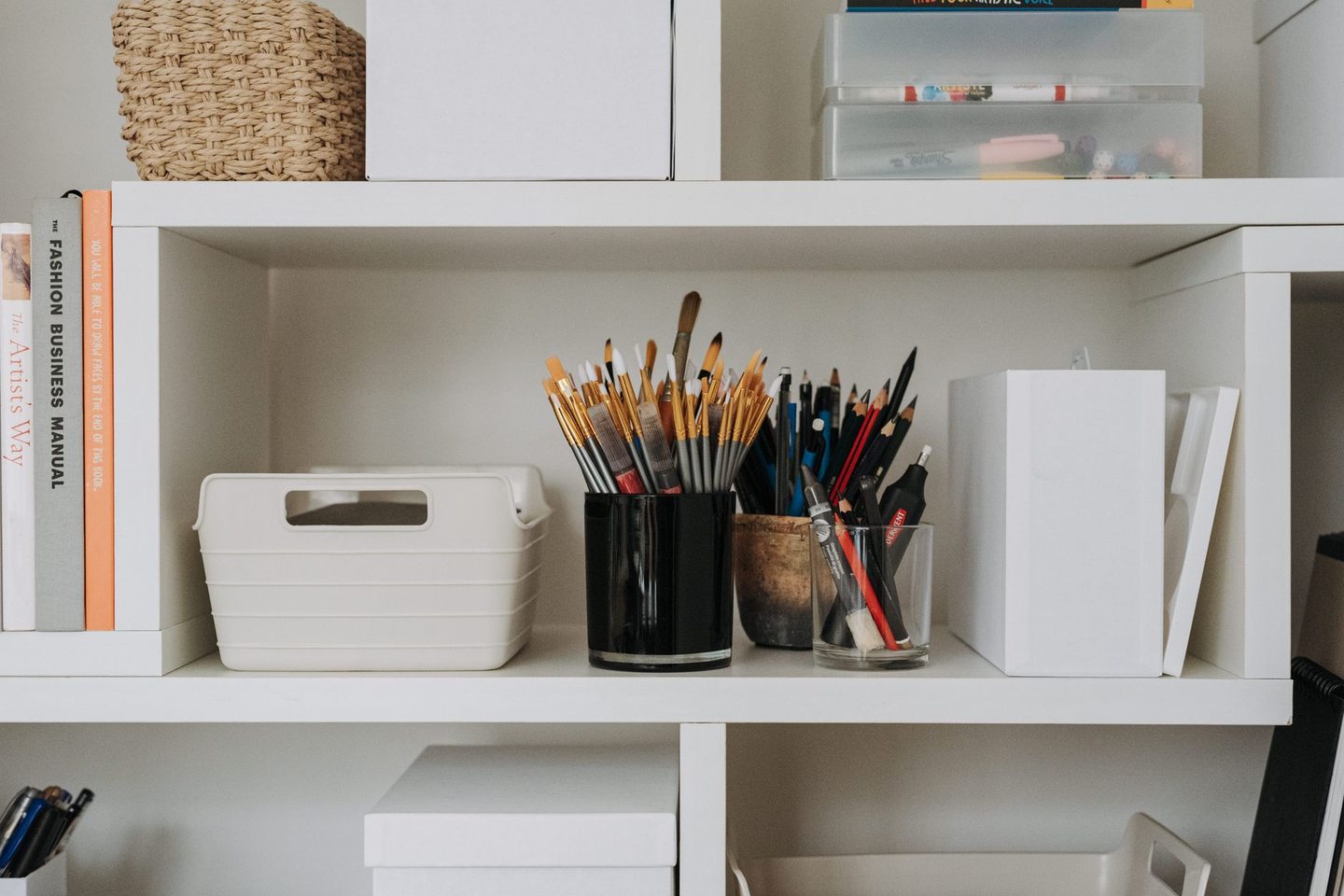
A small caddy can hold the limited materials selected for a supervised session. Choose one the adult can move safely and keep loads modest. A handle does not make it safe for every child to carry. Return controlled materials to secure storage after the activity rather than leaving a ready-to-use kit within reach.
4. Treat rolling carts as adult-managed equipment
A cart can be an option where its instructions, load and route suit the room. Do not tell a child to wheel a loaded cart around furniture, stairs or other children. Keep it stable while in use, use any supplied brakes as directed and prevent pulling or climbing. If those checks cannot be met, choose stationary storage instead.

5. Skip glass jars in children's reach
Use stable, suitable non-glass storage for permitted pencils or brushes. An attractive mason jar is not a necessary organizer, particularly where it can fall or break. Keep drinking vessels and food containers from being confused with art-material containers. CPSC advises keeping food and drinks out of the art area and supervising children closely.
6. Check wall storage before installing it
A pegboard or wall organizer needs the correct mounting, load limits and secure accessories for the actual wall. Follow its instructions and rental rules, and get suitable installation help. Do not hang accessible scissors, small hooks, cords or hazardous materials just because they look organized. Wall height alone does not reliably control access if it encourages climbing.

7. Evaluate door pockets individually
An over-door organizer must fit without obstructing the door, required exit or safe closure. Check how it is secured and what its pockets can hold. Do not use it as open storage for beads, glue, paints or small parts accessible to a child for whom they are unsuitable. A different secure location may be the better option.
8. Use drawers and shelves within their limits
Follow furniture installation and anchoring instructions. CPSC recommends anchoring furniture such as bookcases against tip-overs, including a sound existing unit you want to reuse. Avoid heavy overhead containers and unstable drawer stacks. A low shelf is not automatically child-safe, and a decorative lock is not evidence of secure storage for hazardous supplies.
9. Make a limited portable kit for the destination
Choose only materials suited to the child’s age, the setting and available supervision. Keep identifying labels with products. Do not assume a tackle box is a child-safe art kit, or recommend drawing with pointed tools in a moving car. Plan a stable activity space and a secure way to transport the closed kit, separate from food.
10. Label and close the session
Show where permitted items go, check that supplies are closed as directed and secure adult-controlled materials. Wash hands after use, consistent with CPSC art guidance. Review damaged or unsuitable items through their labeled and local disposal routes. Rotation and a turntable are optional, not requirements. The retained Amazon links are category searches, not safety-reviewed bins, shelves or organizers; buy only after a specific storage need remains.
Choose the smallest setup that solves the problem
- Shared dining table: a small adult-carried caddy for the activity, a flat paper space and secure storage for the rest.
- Too much rummaging: a few shallow containers for permitted supplies, rather than a separate bin for every color.
- Wet projects taking over: one suitable drying surface that does not block doors, walkways or food preparation.
- Younger siblings in the room: settle access controls and supervision before choosing open shelves or clear bins.
Try one ordinary art activity with the setup. Notice what is difficult to find, carry or return, then change that part. These are editorial planning suggestions, not products I have tested with children. If your existing storage works, buying another organizer is optional.