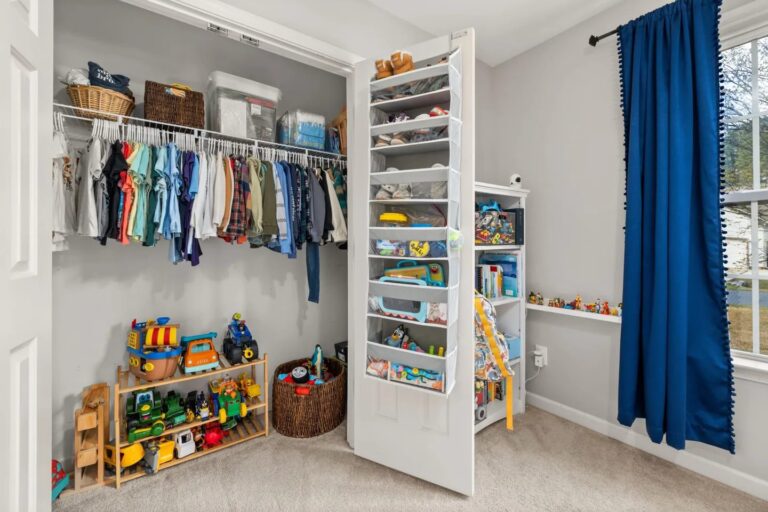
Brilliant Ways to Store Legos Without the Mess
Shopping links: These links open Amazon search results. They are optional browsing suggestions, not verified product reviews or price/availability checks.
Choose storage for the builders in the home
LEGO brick storage has two jobs: keep the pieces useful for their intended builder and keep small parts away from anyone who should not have them. Follow the age guidance for each set. A tall shelf or closed decorative box does not automatically make small bricks safe around younger siblings or pets. Start with a limited collection in one supervised area rather than buying a complicated drawer system immediately.
Separate small-part access from easy access
CPSC guidance says to follow toy age recommendations and keep toys intended for older children away from younger children. Keep small bricks and minifigure parts in adult-controlled storage whenever younger children can enter the space. Larger-brick products have their own age guidance; do not assume every item in a mixed collection is suitable. Review the actual contents before handing over a bin. A label or a child’s promise is not a physical access control.
Try a broad sort before color sorting
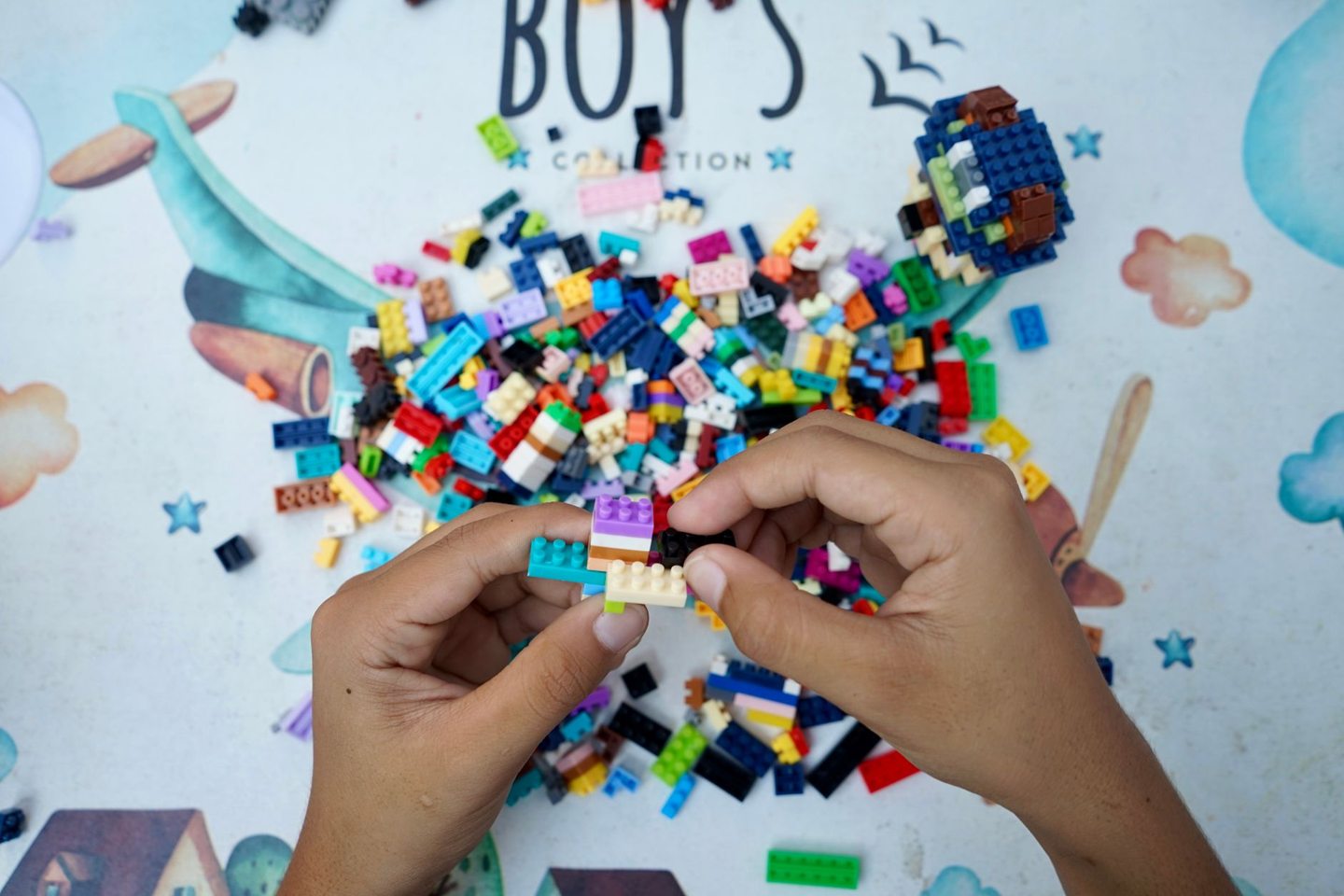
For a small collection, one suitable shallow tray may be enough during play. For a larger collection, try broad groups such as basic bricks, wheels and special pieces. Color sorting is optional and may make some shapes harder to find. Use the categories the builder understands, then adjust after a few sessions. Avoid assigning an elaborate sorting job that prevents the child from using the collection or makes each cleanup another full project.
Choose containers without adding new hazards
Use intact, suitable toy-storage containers that are easy to handle and appropriate for the household. Avoid glass jars, sharp-edged tins and containers that look like current food packaging. Keep any small removable lids or dividers under the same access controls as the bricks. Do not assume a tackle box or hardware drawer is child-safe. Check the product’s intended use, latches, stability and any small parts before using it in a child’s room.
Give building a contained place
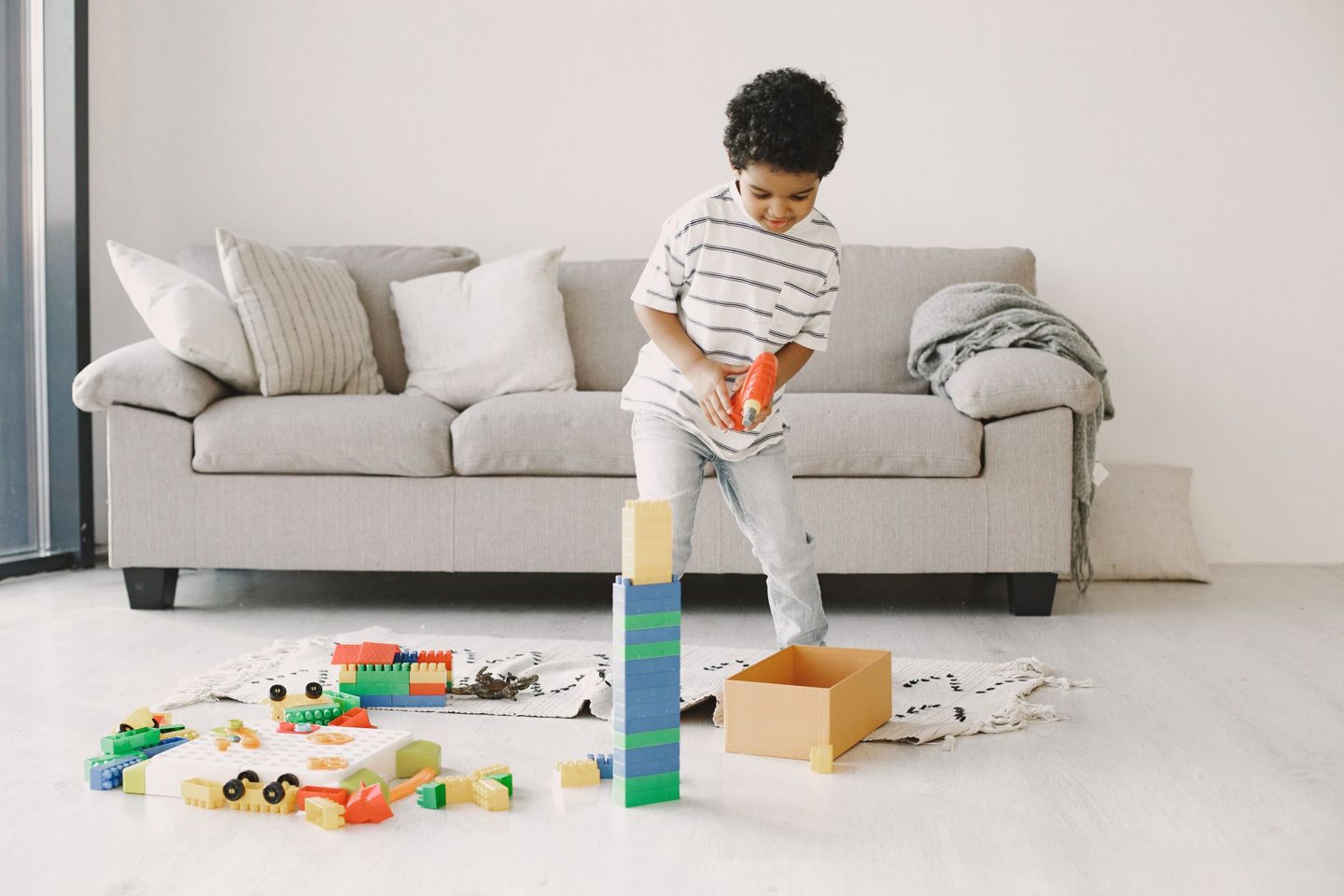
A tray or age-appropriate mat can define the area without spreading every piece across the walking route. Keep it clear of doors, stairs and routes other people use. Follow the mat’s instructions and avoid introducing long drawstrings or loops around young children. Do not lift a loaded mat by improvised ties. At the end of play, an adult should check for pieces that escaped the area, including beneath furniture and where pets can reach.
Make shelving and carts adult decisions
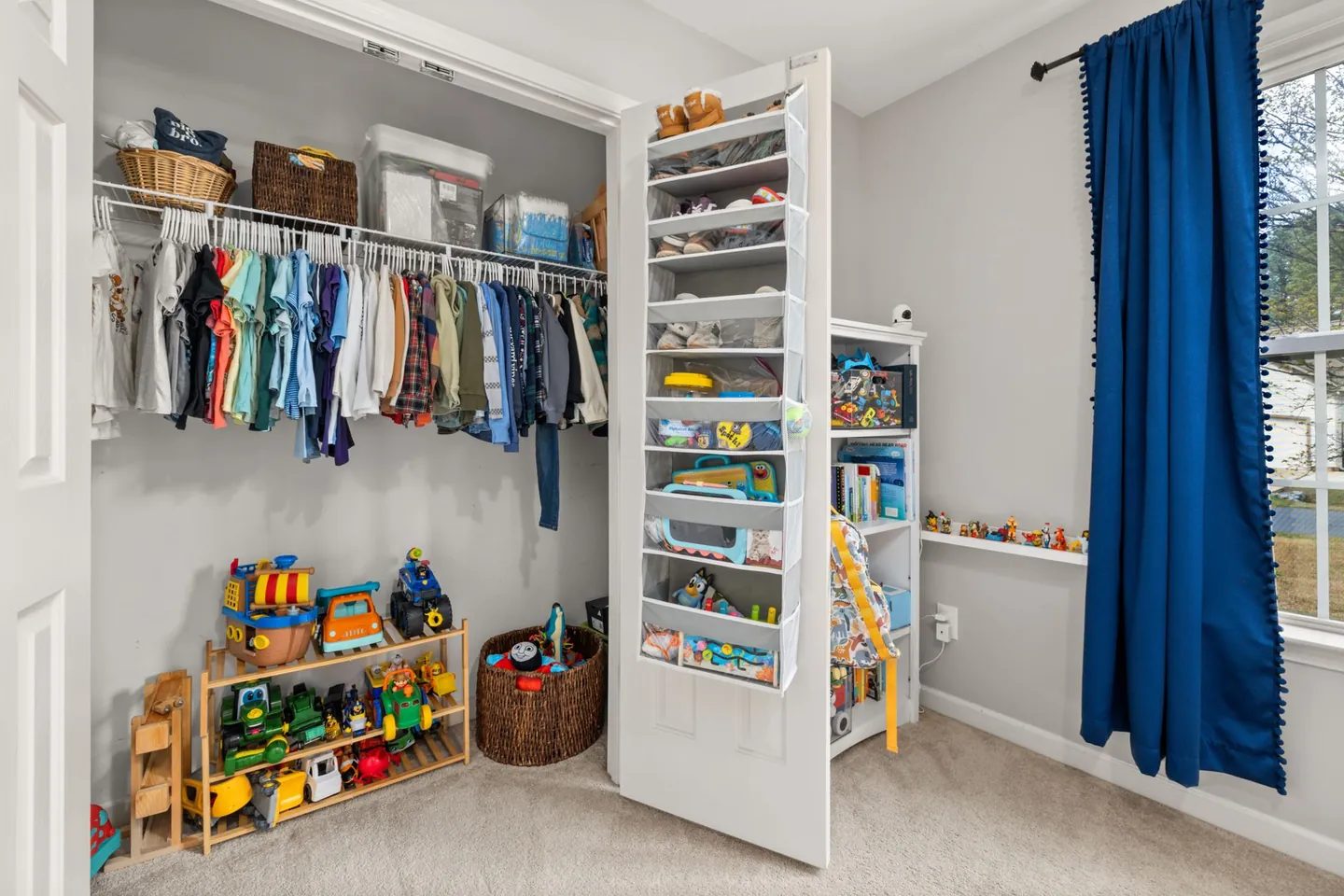
Put suitable everyday toys where their intended users can reach them without climbing, but do not put small bricks within a toddler’s reach. Follow furniture anchoring instructions and keep heavier containers low. A high shelf alone is not secure storage if a child can climb toward it. Use a cart only when it is stable, appropriate for the load and managed to prevent rolling or climbing hazards. Mobility is optional, not an automatic improvement.
Separate ongoing builds from loose parts
Agree which small area can hold a work in progress and which route must stay open. Use a stable surface suited to the build’s weight and size, away from edges where someone might pull it down. Photograph a build only if the builder wants a record before dismantling; do not quietly break it up for a tidy shelf. Keep instructions in a folder or suitable file, checking that any digital copy is accessible before discarding anything the owner values.
Label for the handoff, not for perfection
Use plain words or pictures for the broad categories you actually keep. Ask the builder to try returning a few pieces and see whether the categories make sense. Keep adult-only storage clearly separate. Rotation is optional: choose an agreed subset and keep the rest safely stored, without promising improved creativity or renewed interest. Do not donate, mix or dismantle another person’s sets without permission, even when they have not used them recently.
Check the system after ordinary use
Look for cracked containers, unstable drawers and pieces outside the play area. Follow product guidance for cleaning and remove damaged items from use pending an appropriate decision. Keep packaging bags out of children’s reach. The retained Amazon links are optional searches, not tested recommendations, and a wall command center is not necessary brick storage. Start with one safe container and a clear cleanup handoff, then add sorting only when it solves an observed problem.