Back to School Organization Hacks for Clutter-Free Spaces
Back-to-school organization works best when belongings and information have a clear route through the home. Begin with what arrives each day, what needs action, and what must leave again. Use a few understandable categories instead of turning every room into a school-supply display. No particular app, furniture set, or storage product is required.
Disclosure: These links open Amazon search results. They are optional browsing suggestions, not verified product reviews or price/availability checks.
Start with the arrival routine

Choose a reachable place for bags, shoes, and daily equipment near the route people actually use. Keep the door and walking space clear. Check hook fittings, shelf stability, and filled-container weight.
Agree what happens after arrival: unpack food containers, put papers needing attention in their folder, and return necessary equipment to its charging or storage location. Adapt tasks to each child’s age and abilities.
Separate action papers from records
A small folder for forms awaiting attention can prevent them mixing with completed work. Assign an adult to review it and record deadlines. Keep ready-to-return items where they will actually make it into the bag.
Store reference records separately, with suitable privacy. Check retention needs before disposal. A binder is useful only if its categories are simple enough to maintain and it is reviewed when information changes.
Contain homework supplies near the task
Use an existing drawer, box, or tray for the supplies used regularly. A shared table can serve as a homework area if materials can be set out and put away easily.
Check lighting, usable space, and access needs. Keep restricted tools separate and manage chargers according to device instructions. Ask the child which materials are genuinely useful rather than filling a container from a generic list.
Make the supply inventory small and visible
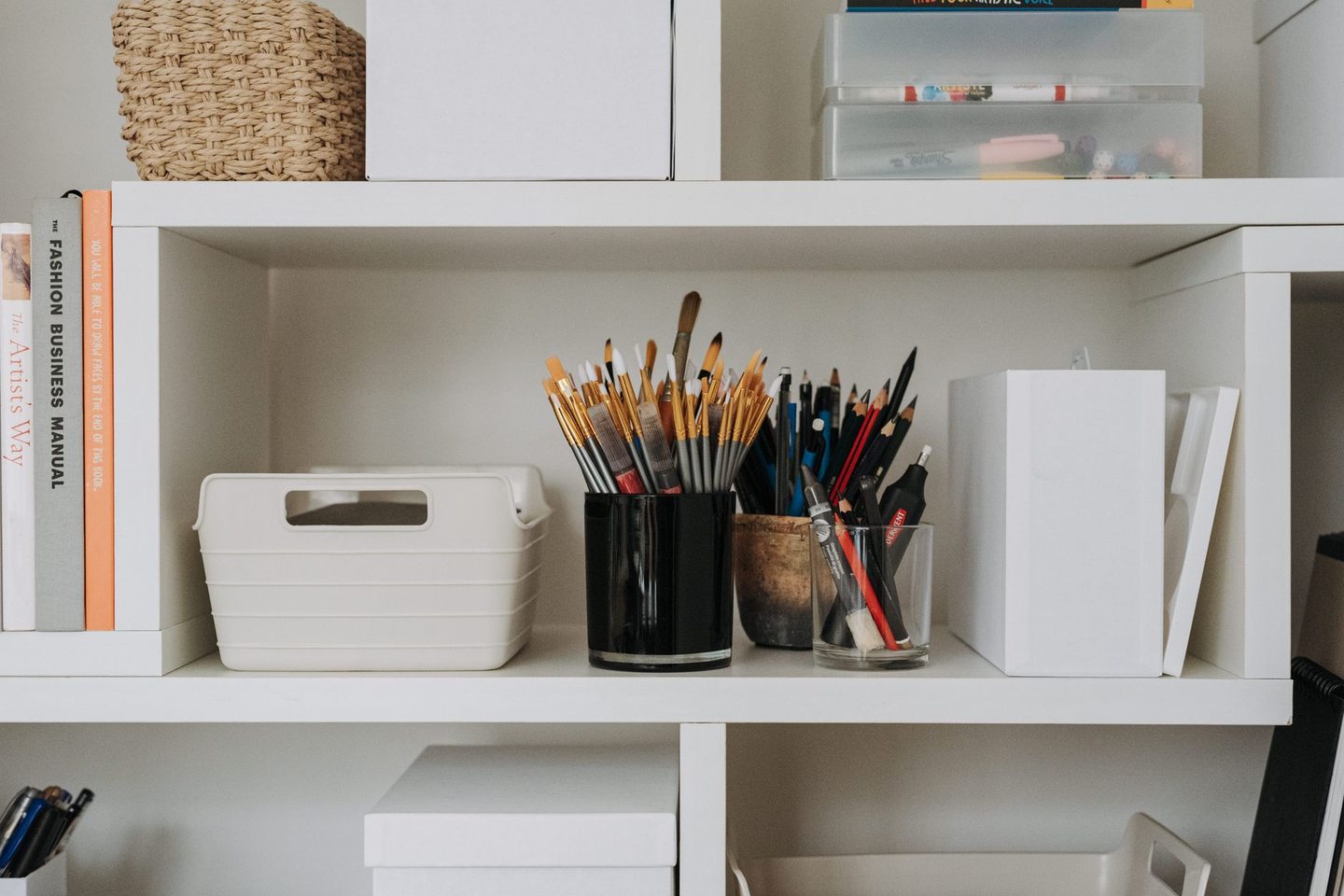
Group refills and spare supplies in one defined area. Use words or picture labels when needed, whether or not containers are clear. Leave room to return items without careful packing.
Check the school’s current list and existing stock before shopping. Do not buy duplicates because a matching storage set has empty compartments. Set aside damaged or unsuitable items for appropriate repair or disposal.
Keep a shared calendar current
Choose one main schedule and agree who records changes. Include activity times, required equipment, and transport responsibilities where needed. Confirm responsibilities with the people involved.
Use names or symbols with color coding so the entries remain understandable. If using a digital tool, review access and notification settings rather than assuming everyone can see the same information. Keep private schedules from unnecessary exposure.
Use a short evening reset
Return the few categories that drift most often: papers, bags, supplies, and equipment. Prepare what can be prepared safely for the next day while leaving temperature-sensitive food stored appropriately.
The reset should fit the household, not demand a spotless room. If a destination is repeatedly ignored, move it or simplify it. A lidded box that is awkward to open may be the problem rather than a lack of reminders.
Review the system after normal use
Hold a brief check-in to identify missing supplies, changed dates, and recurring obstacles. Let children explain what is hard to reach or understand. Make one change and test it before adding more boards or bins.
Keep the setup manageable during a busy week. Organization can make materials easier to find and return, but it cannot guarantee better grades, reduced anxiety, or a conflict-free school year. Use appropriate school or professional support for difficulties that storage alone cannot address.
Amazon category searches
Optional browsing links. Check the specific listing, dimensions, materials, instructions, and current terms before buying.