10 Bathroom Cleaning Hacks Every Mom Needs to Know
Busy households need bathroom habits that are quick and safe. This guide keeps the useful ideas and drops or limits the ones that could damage surfaces or cause harm.
Disclosure: These links open Amazon search results. They are optional browsing suggestions, not verified product reviews or price/availability checks.
Vinegar: useful, with limits

Follow the exact surface or fixture care instructions before choosing an acid, abrasive or household ingredient. A hidden-area test is useful only where the method is permitted; it does not override a warning. If compatibility is unclear, use an approved method or ask the maker rather than experimenting. Never mix vinegar with bleach or another cleaning product.
Baking soda for scrubbing
Use baking soda only where the surface maker permits an abrasive method. Do not routinely sprinkle powder on rugs or vacuum it up without checking both the textile and vacuum instructions. Fine dust can affect some filter systems, as the linked Miele manual illustrates; it is not a universal rule about every vacuum. Miele model-specific filter guidance.
Dryer sheets on soap scum
Some people wipe glass with a damp dryer sheet. Results vary and the sheets can leave a residue, so the claim is not endorsed here. A non-scratch sponge and a label-directed cleaner are more predictable.
Rust stains
Use a rust-removal method approved for the fixture material and finish. This guide does not recommend a lemon-and-salt recipe for an unidentified surface. Follow compatible product directions, including ventilation, protective equipment and rinsing requirements.
Toothpaste, pumice and rubbing alcohol
Do not use toothpaste, pumice or rubbing alcohol as a general polishing recipe for bathroom fixtures. Check the exact material and finish guidance first. Abrasion can damage coatings, and rubbing alcohol is flammable. A household ingredient or a hidden-area test is not proof of suitability.
Drains
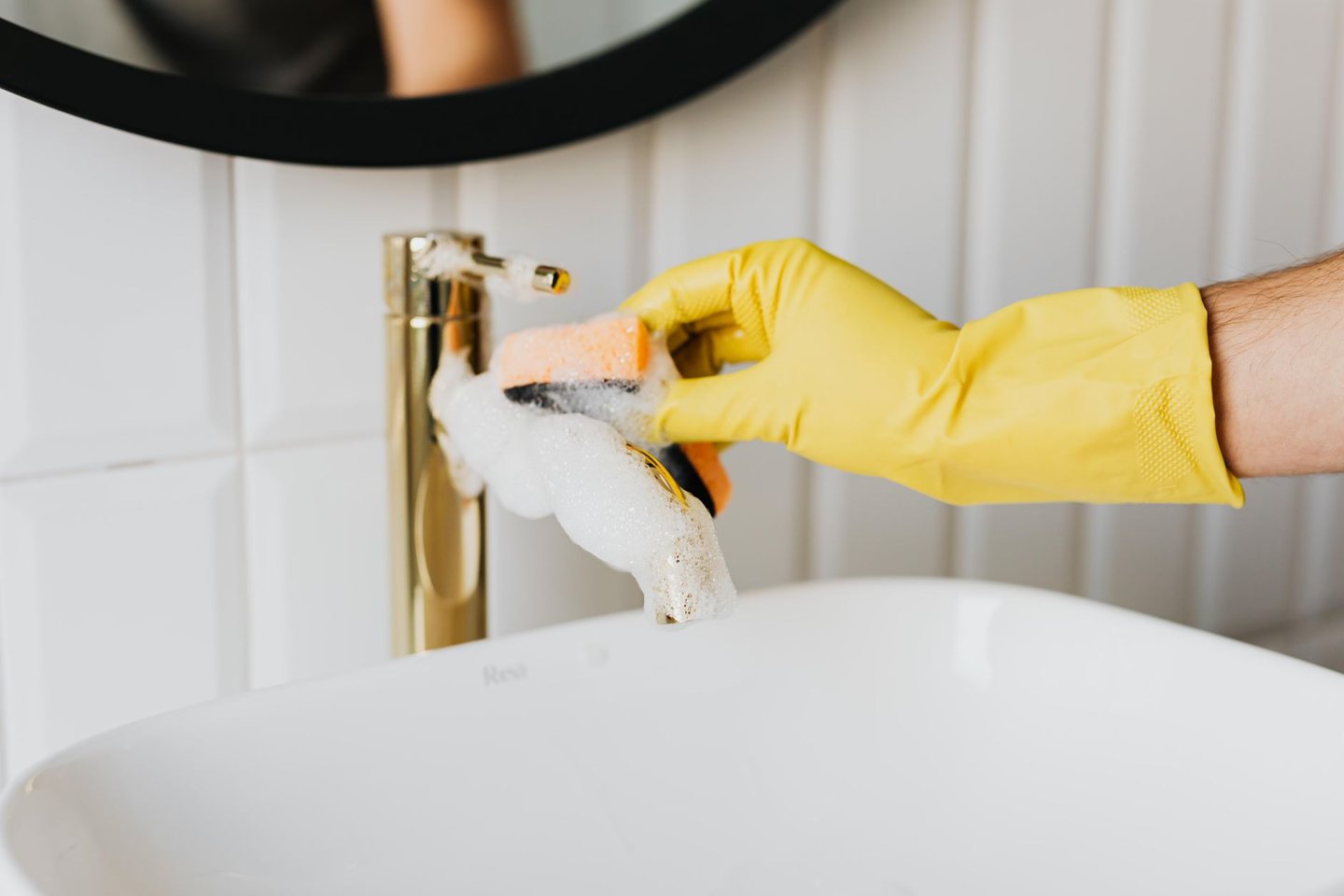
Remove only accessible debris using a method the fixture instructions permit, and only when no chemical cleaner or other exposure hazard is present. Do not add hot water, vinegar, baking soda or another treatment to a drain containing an unknown cleaner. Do not reach into standing chemical residue. Ask a plumber about a persistent blockage and tell them what has already been used.
Mould
The EPA’s approach for small hard-surface patches is detergent and water, scrubbing, rinsing and drying completely, plus fixing the damp. Peroxide sprays are not given here as a mould killer. See the EPA pages for when to call a professional.
Prevention and fresh air
Squeegee after showers, run the fan, and use a washable liner you can launder. A homemade room spray of oil and alcohol is not recommended. Alcohol is flammable and oils can irritate people and pets. An open window and dry towels do more for odour.
Safety habits
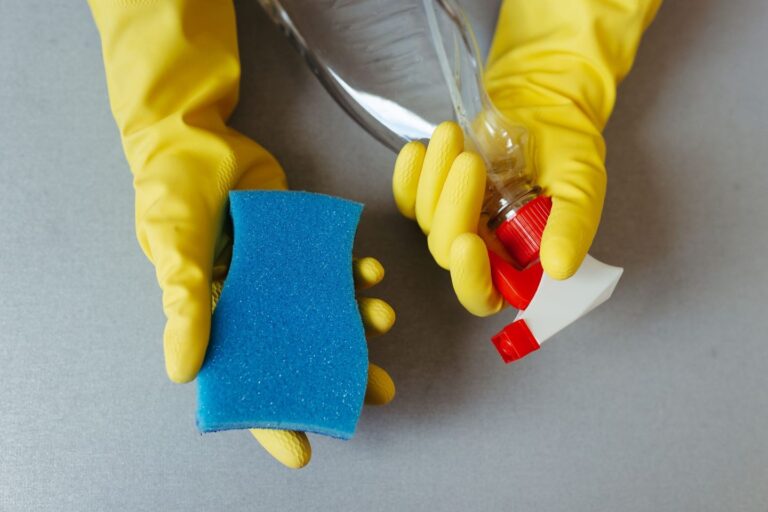
- Wear gloves for toilets and cleaners.
- Ventilate the room.
- Use fewer products, one at a time.
- Keep products in original labelled containers, out of reach of children.
Questions people ask

What is the best quick daily habit?
A squeegee swipe or towel wipe after showers, plus airing the room.
Can several cleaners be used one after another?
Do not layer cleaners or assume that rinsing and ventilation make any sequence compatible. Follow the specific product and surface instructions. If previous residues or compatibility are unknown, stop rather than applying another chemical.
Are DIY cleaners safer?
Not automatically. Natural ingredients can still irritate or damage surfaces, so use labels and test spots.
Sources
On not mixing household cleaners, see the CDC chlorine fact sheet. For product directions, always follow the label.
Amazon category searches
Optional browsing links. Check the specific listing, dimensions, materials, instructions, and current terms before buying.