Small Kitchen Storage Solutions for Renters (No Drilling)
Disclosure: These links open Amazon search results. They are optional browsing suggestions, not verified product reviews or price/availability checks.
Small kitchens run out of storage because most of the space is in places we do not use: the inside of doors, the gap above shelves, the wall space around the window. Renters have an extra rule, which is that nothing can go into the wall. Here is what actually adds storage without drilling, and what to skip.
The short version
- Free storage first: declutter before you buy anything.
- Door and vertical space beat floor space.
- Use tension rods and removable hooks, and check weight ratings on the pack.
- One rolling cart is worth more than five small organizers.
- Buy only after you have measured.
Before you buy: do a 20-minute purge
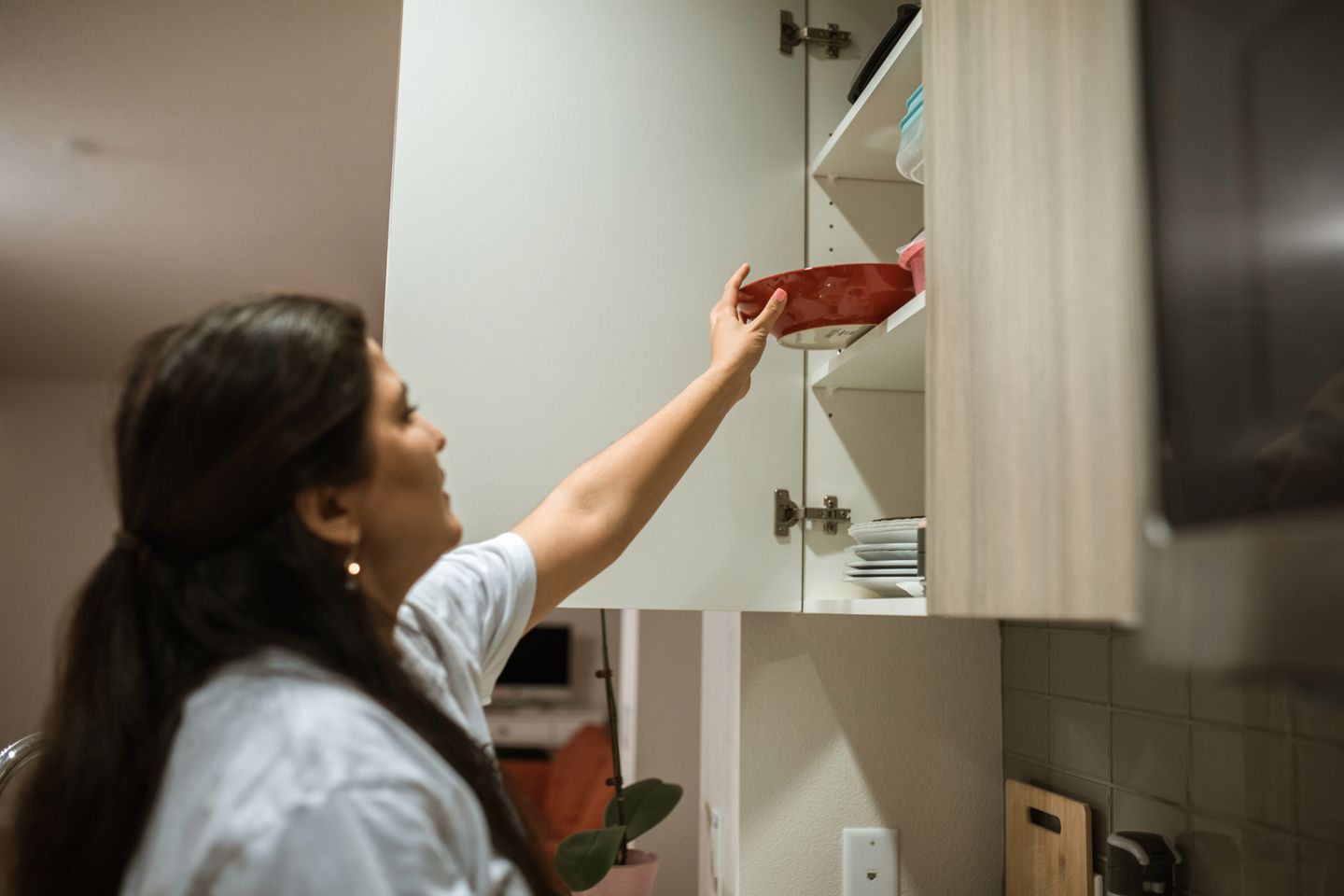
Most small kitchens do not have a storage problem. They have too many duplicate items. Take out the second can opener, the mugs nobody uses, and the gadget you bought once. Even clearing one cupboard makes the next steps cheaper.
Cabinet door space
The inside of a cabinet door is the easiest free space in a rental. An over-the-door organizer or a small rack that hooks over the door edge can hold foil, wraps, cutting boards or cleaning bottles. Check that the door still closes and that nothing hits the shelf inside.
Tension rods
Choose a storage support designed and rated for its specific contents and surface. Do not suspend filled chemical bottles by their necks or trigger handles from an ordinary tension rod. Pressure fittings are not automatically safe for every cabinet finish or load. Keep chemicals upright in their original packaging and secure from children.
Shelf risers and stackable bins
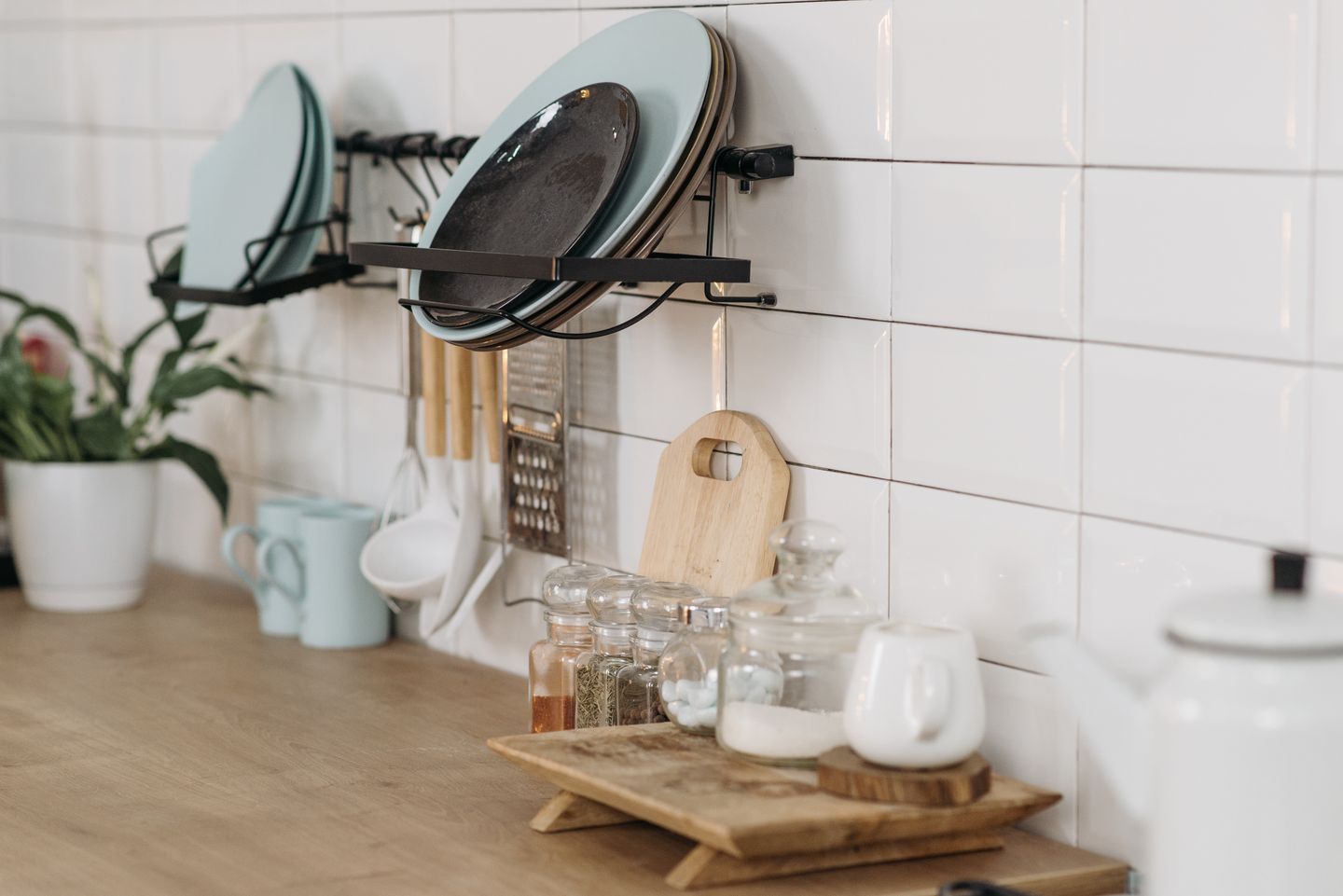
A shelf riser can add a second layer above plates if it fits the shelf and its rated load. Use bins designed to stack together, within their stated stack and load limits. Matching dimensions alone do not establish safe stacking. Keep the arrangement stable and easy to reach without lifting heavy items overhead.
Removable hooks
Adhesive hooks are fine for lightweight items such as oven mitts, a small whisk or a tea towel. They are not a good idea for heavy pans. Follow the instructions about surface cleaning and wait time, and keep to the rated weight. On painted or textured walls, test in a hidden spot first.
A rolling cart
A slim rolling cart may use a spare floor gap, but first preserve the refrigerator’s model-specific ventilation clearances, door swing and service access. Do not block vents or appliance connections. Use a cart as a work surface only if designed for that use, stable at its rated load and secured with wheel locks as directed. Follow food-contact care instructions. See GE’s explanation of model-specific refrigerator clearances.
Over-the-sink or over-the-stove shelving
A purpose-made over-sink shelf may help if its dimensions, support, rated load and installation suit the sink and leave access to taps and controls. Do not improvise shelving over a stove. Range and hood manuals specify heat, combustible-material and ventilation clearances; a shelf’s load rating alone does not establish a safe location. See Whirlpool’s range-clearance guidance.
What to skip
Skip anything that only moves clutter around. Large organizers that do not fit your shelf depth, decorative baskets with no purpose, and matching sets bought before you measured will cost you more than they save.
Product ideas to look at (suggestions, not tested)
These are the kinds of products that fit the ideas above. We have not tested them, and the links go to Amazon search results so you can compare sizes, reviews and prices yourself. Measure before you buy.
| What to look for | Why it helps | Link |
|---|---|---|
| Over-the-door cabinet organizer | Uses the inside of a door, no tools | See options on Amazon |
| Tension rod (heavy duty) | Vertical slots for boards and trays, pressure only | See options on Amazon |
| Adjustable shelf riser | Adds a second level under a shelf | See options on Amazon |
| Slim rolling cart | Pantry on wheels for narrow gaps | See options on Amazon |
| Removable adhesive hooks | Light items only, check weight rating | See options on Amazon |
A personal kitchen reset plan is coming
We are preparing a small beta for renters: you describe your kitchen (size, problem areas, no-drill limits) and get a step-by-step reset plan with a short shopping list that fits your space. It is not open yet. For now, the guides below cover the same ground.
Frequently asked questions
What is the cheapest way to add storage in a small kitchen?
Declutter first, then use the inside of cabinet doors and the vertical gap above shelves. Both cost little and need no tools.
Are adhesive hooks safe for rentals?
They are designed for removable use on many surfaces, but always follow the package instructions and weight limit. Test on a hidden spot first.
Do I need a pantry cabinet?
Not necessarily. A suitable cart or shelf may help, but follow its assembly, load and any anchoring instructions. Freestanding does not automatically mean installation-free. If required restraint or appliance clearances cannot be met, choose another option.
Keep reading
- Simple Pantry Organization Hacks for Small Spaces
- Kitchen Cabinet Organization Tips for Every Chef
- Under Sink Storage Kitchen Ideas to Save Space
- 10 Kitchen Organization Ideas for Small Apartments
This guide is general, research-based advice. We have not tested every product or method mentioned. Check weight limits and instructions on any adhesive or tension product, and follow your lease.
How we choose (and what we do not claim)
We compare organizer types by the space they save, how they mount, and whether they come down clean at move-out. We check the maker’s stated weight limits and the renter-safety of the mounting method, not lab tests. This guide is not a hands-on test of specific products; where we say a type is a good or bad fit for renters, that is about how that kind of organizer behaves in small rental kitchens, not how one brand performed in our own kitchen.
Questions renters ask
Are adhesive organizers safe on tiles and paint? On smooth, clean tile they usually hold well. On painted drywall, strong adhesive strips can lift paint when removed, so a freestanding shelf or an over-the-cabinet-door rack is the safer pick.
Do I need my landlord’s permission? For anything drilled into walls or cabinets, yes, ask first. Adhesive, tension and freestanding organizers normally do not need permission because they leave the surface unchanged.
What if something leaves a mark? Test a small hidden spot first, and keep the original fittings so move-out is easy.