Clever Linen Closet Organization Hacks to Try
Shopping links: These links open Amazon search results. They are optional browsing suggestions, not verified product reviews or price/availability checks.
Organize the linen you use, not an ideal photograph
Start with one practical problem: sheets that are hard to identify, towels that fall forward or a shelf nobody can reach. A linen cupboard should let the household take out and return clean items without rearranging everything. You do not need matching bins or a fixed number of towels to begin. These are storage options to adapt, not a tested capacity formula or a reason to discard sound textiles just because they are old.
Check ownership and condition before clearing shelves
Work on one shelf at a time so the floor and doorway stay passable. Separate household linen, borrowed items and belongings someone else needs to review. Set aside damaged textiles for a decision about repair, a suitable reuse or disposal. Do not assume a donation service accepts worn bedding; check its current requirements before taking it there. Keep a useful reserve based on laundry access, visitors and actual household needs, not a universal minimum.
Put away only clean, fully dry textiles
Follow each item’s care label for washing, drying and storage. Do not seal damp towels or bedding into a bin. If the cupboard smells musty or feels damp, investigate the source rather than adding fragrance and closing the door. Storage containers are not a repair for a leak or persistent moisture problem. Avoid loose oils, powders or scented mixtures among textiles. Scent is optional and should not be presented as a hygiene or health treatment.

Sort by bed size and everyday use
Keep the sheets for each bed together, with an easy-to-read size label if that helps the household. A matching pillowcase can hold a set when the fabric is dry and the bundle remains easy to handle. Separate daily towels from guest reserves or cleaning cloths so someone does not have to inspect every pile. Choose a few categories that other household members can return without following a complicated folding system.
Try your existing shelves before adding bins
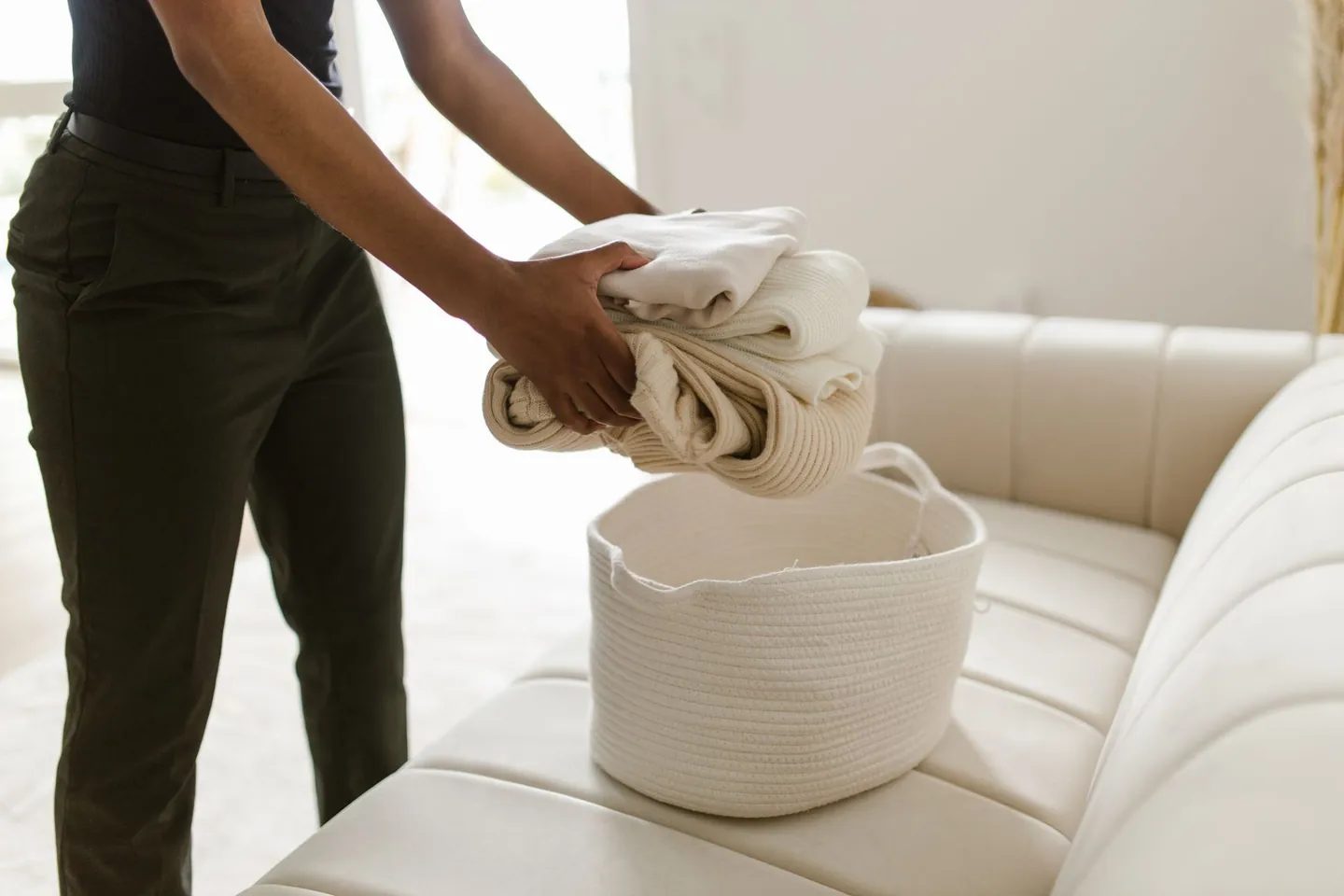
Fold or roll one set of towels and compare which method stays accessible in the available depth. Rolling does not always save space, and a basket can reduce usable width. Use a container only when it makes an item easier to find or prevents a small category from scattering. Check for rough edges and make sure it can be lifted comfortably. A heavy container at the back of a deep shelf is not convenient storage.
Keep stacks low enough to remove one item
Shelf dividers can help some piles stay separate, but they must suit the shelf thickness and load. They do not strengthen a weak or sagging shelf. Inspect supports and follow the shelving instructions before adding weight. Do not make a load-bearing shelf from ordinary tension rods or improvised parts. Any new fixed shelving needs appropriate installation and required property permission. Leave enough space to remove a blanket without pulling the shelf’s contents forward.
Separate linen access from chemical storage
A low shelf for children’s towels should not sit beside accessible cleaning products or loose laundry supplies. Store chemicals in their original labeled containers and in suitable secure storage, following their labels and household access needs. Do not move them to a door pocket simply to free a linen shelf. Toiletries also need appropriate access and storage conditions. An organizer creates compartments, not a child-resistant barrier or a guarantee against leaks.

Use the door only when it still works normally
Check an over-door organizer’s fit, loading and clearance before using it. The door should close and latch normally, with hinges and handles unobstructed. Do not force it against shelves or damage a rented finish. Light, suitable items may work; heavy bottles and chemical supplies are not a default choice. Adhesive organizers also need the right surface and use conditions. If the door arrangement does not fit, leave it unused rather than improvising a mounting.
Be selective about seasonal compression
Vacuum bags are not suitable for every duvet, pillow or textile. Check the maker’s care and storage instructions before compressing an item, and keep it clean and fully dry. A labeled breathable bag or ordinary shelf may be more appropriate for some pieces. Do not store a compressed package where it blocks ventilation or requires lifting a heavy load overhead. Seasonal rotation is useful only if you can still identify and retrieve the items when needed.
Place items for safe reach
Keep frequently used linen in a comfortable reach zone. Use high shelves only for suitable light items that can be retrieved safely, not bulky boxes above someone’s head. Do not climb on shelves, chairs or the cupboard door. If a suitable step stool is needed, use it as instructed on an appropriate surface and store it without blocking the doorway. Keep the floor area clear where it is needed for access rather than filling every gap.
Keep a short inventory and a workable reset
A simple note of bed sizes and reserve sets may prevent duplicate buying. Update it when the contents change; it need not become a detailed spreadsheet. After laundry, put items back where the household can find them and review any stack that keeps falling. Retained shopping links are optional category searches, including older closet and shoe-storage links. They are not a claim that the products suit this cupboard or have been tested by DeclutterHive.
Retained links and sources
- Optional Amazon category search: Velvet Hangers
- Optional Amazon category search: Shelf Dividers
- Optional Amazon category search: Shoe Rack
- Easy Closet Organization Ideas for Small Spaces
- How to Declutter Clothes in 5 Simple Steps
- Shoe Storage Ideas for Small Space Living
- CPSC: secure storage and furniture anchoring