Kids Closet Organization: Systems for Easy Access
Shopping links: These links open Amazon search results. They are optional browsing suggestions, not verified product reviews or price/availability checks.
Build a closet system around daily access
A child’s closet can work without matching hangers or a full clear-out. Start with a small goal, such as finding a school outfit or returning pajamas. Choose a section the child can help with at a level that suits their understanding and access needs. This is a storage guide, not a promise to prevent difficult mornings, teach responsibility or reduce stress. Keep decisions about possessions respectful and practical.
Check stability before rearranging
Look at the wardrobe, drawers, shelves and rails before adding weight or accessories. Follow assembly and anchoring instructions and keep heavy items low. CPSC guidance addresses furniture tip-over risks around children. Do not put desired objects high enough to invite climbing, and do not treat a lightweight bin as protection from a falling unit. If a shelf sags, a rail loosens or the wardrobe moves, stop using the affected part until it is assessed.
Sort one category with the child
Choose pajamas, socks or another manageable category rather than emptying the whole closet. Separate what fits and is useful now from items needing repair, a later decision or another storage location. A garment being out of season or unworn for six months is not an automatic reason to donate it. Keep specialist clothing, school requirements, spare changes and sensory preferences in the decision. Ask about favorites before moving them out of daily reach.

Keep future-size and sentimental items deliberate
Agree which hand-me-downs or future-size clothes are worth keeping and where they can fit safely. Label them by the information useful to your household, without treating the size on a tag as a guarantee of fit. A small keepsake collection is allowed. Do not require someone to discard an item because a named tidying method says it should spark joy. Use a contained review group when a decision is not ready.
Choose a few clear categories
Try everyday tops, bottoms, pajamas and socks, changing the groups to suit the actual wardrobe. A child may find a broad drawer easier than many narrow compartments. Use pictures, words or both where useful, but do not assume a label removes the need for a demonstration. Let the child try finding and returning an item. Adjust the destination if the task is awkward rather than adding more labels to an unclear system.

Place suitable daily clothes within comfortable reach
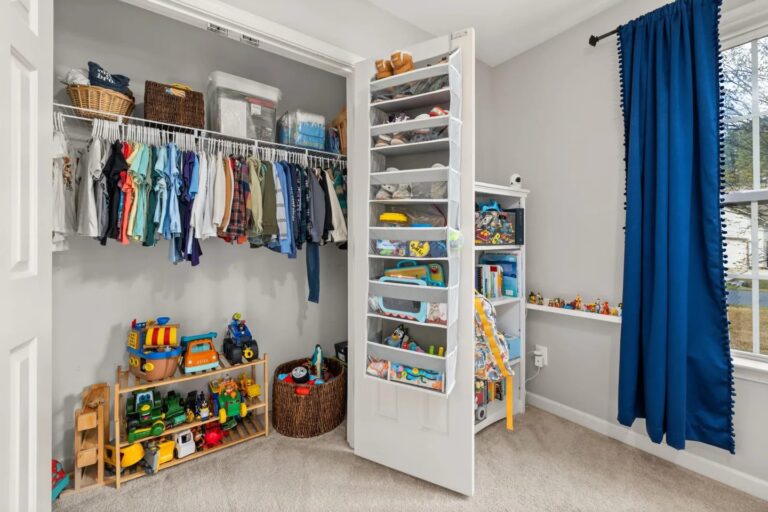
Keep the clothing the child can appropriately choose where it can be reached without climbing or pulling on a heavy drawer. Reserve adult-controlled areas for items that should not be accessible. An extra rod or hanging organizer must be compatible with the wardrobe, load and installation instructions. Do not improvise a low rail, hang a heavy bag from a door or assume a fabric cubby can support toys and shoes indefinitely.
Store seasonal clothes according to their needs
Clean and dry garments as their care instructions require before suitable storage. Choose a container and location that avoid dampness, heat damage and unstable stacks. Vacuum compression is optional and not suitable for every garment or filling; check both the clothing and storage-product guidance. Keep bags away from children and pets. Keep a few usable layers available rather than storing every cold-weather item according to the calendar.

Keep baskets and hooks limited
Use suitable intact containers that the intended user can handle without lifting a heavy load. Avoid breakable containers and small loose decorations. Check any hook or over-door product for the surface, fitting, load and door clearance. Do not rely on removable adhesive as an anchoring substitute or a damage-free promise in a rental. You may not need new hardware at all if a low existing drawer can do the same job.
Make the reset a shared handoff
At a convenient point, put clean clothes away and identify anything that needs an adult decision. Do not turn the task into a race or blame the child for growth, an awkward layout or laundry that has not returned yet. Review what fits when there is a reason, such as discomfort or a season change, instead of enforcing constant purges. Choose a few outfits ahead only if that helps and the child is comfortable with it.
Measure the gap before shopping
Check whether there is an actual storage shortage after the small trial. The retained hanger, shelf-divider and shoe-rack searches are optional categories, not tested products or evidence that stacking is safe in your closet. Follow each product’s instructions if selected. A closet is usable when its owners can find suitable clothes and return them safely. Keep the parts of the system that help, and revise the others as needs change.
Retained links and sources
- Optional Amazon category search: Velvet Hangers
- Optional Amazon category search: Shelf Dividers
- Optional Amazon category search: Shoe Rack
- Easy Closet Organization Ideas for Small Spaces
- How to Declutter Clothes in 5 Simple Steps
- Shoe Storage Ideas for Small Space Living
- CPSC: secure storage and furniture anchoring