Seasonal Wardrobe Rotation for Spring and Summer
Shopping links: These links open Amazon search results. They are optional browsing suggestions, not verified product reviews or price/availability checks.
Rotate for your spring and summer, not a universal list
Spring and summer mean different conditions in different places. Heat, rain, cooler evenings, indoor cooling, travel and work can all affect which clothes remain useful. Begin with the next few weeks of actual activities and local weather rather than assuming every coat should disappear. A rotation is a way to change access, not a demand to reduce possessions. This guide does not promise improved mental health, guaranteed garment protection or savings from a seasonal closet change.
Sort a manageable warm-weather category
Choose one drawer or a short section of rail and set out a clean temporary holding surface. Keep doors, the bed and walking routes usable so you can stop partway through. Separate current use, later use, care or repair and items needing an owner decision. Ask before moving or disposing of shared clothes. A garment’s age or lack of wear for a year is not enough to decide its value. Include occasional, cultural, work, changing-size and sentimental needs.
Check what remains useful across the change
Keep accessible layers for cool indoor settings, unexpected weather or upcoming trips. Decide from your own routine whether you need swimwear, formal clothes, workwear or outdoor equipment. Dresses, shorts, tank tops and particular colors are options, not non-negotiable basics for everyone. If trying items on is useful and comfortable, check fit while sitting and moving as well as standing. Otherwise use another practical way to review them. Do not turn a current fit issue into pressure to discard a garment immediately.

Prepare clothes with their labels, not one wash rule
Inspect condition and follow the care instructions for the exact garment. Some items need hand care or professional cleaning rather than machine washing. Keep care and repairs clearly identified until finished, and let garments dry completely before storage. Check any treatment against both the product label and the textile’s instructions. Do not assume that washing every item by the same method is safer, or that adding a perfume product makes an unclean item ready to pack.
Choose storage without a moth-control promise
Use a clean suitable container in a dry location and inspect for damage before filling it. Neither a clear lid nor a fragrance sachet proves protection against moisture or pests. Do not rely on cedar or lavender as a guaranteed moth-control treatment. If pests or damage are present, identify the problem and use appropriate guidance instead of masking the smell or improvising chemicals. Keep any pest-control products in their original packaging, secure from children and pets, and use them only as their labels allow.
Use compression and garment supports selectively
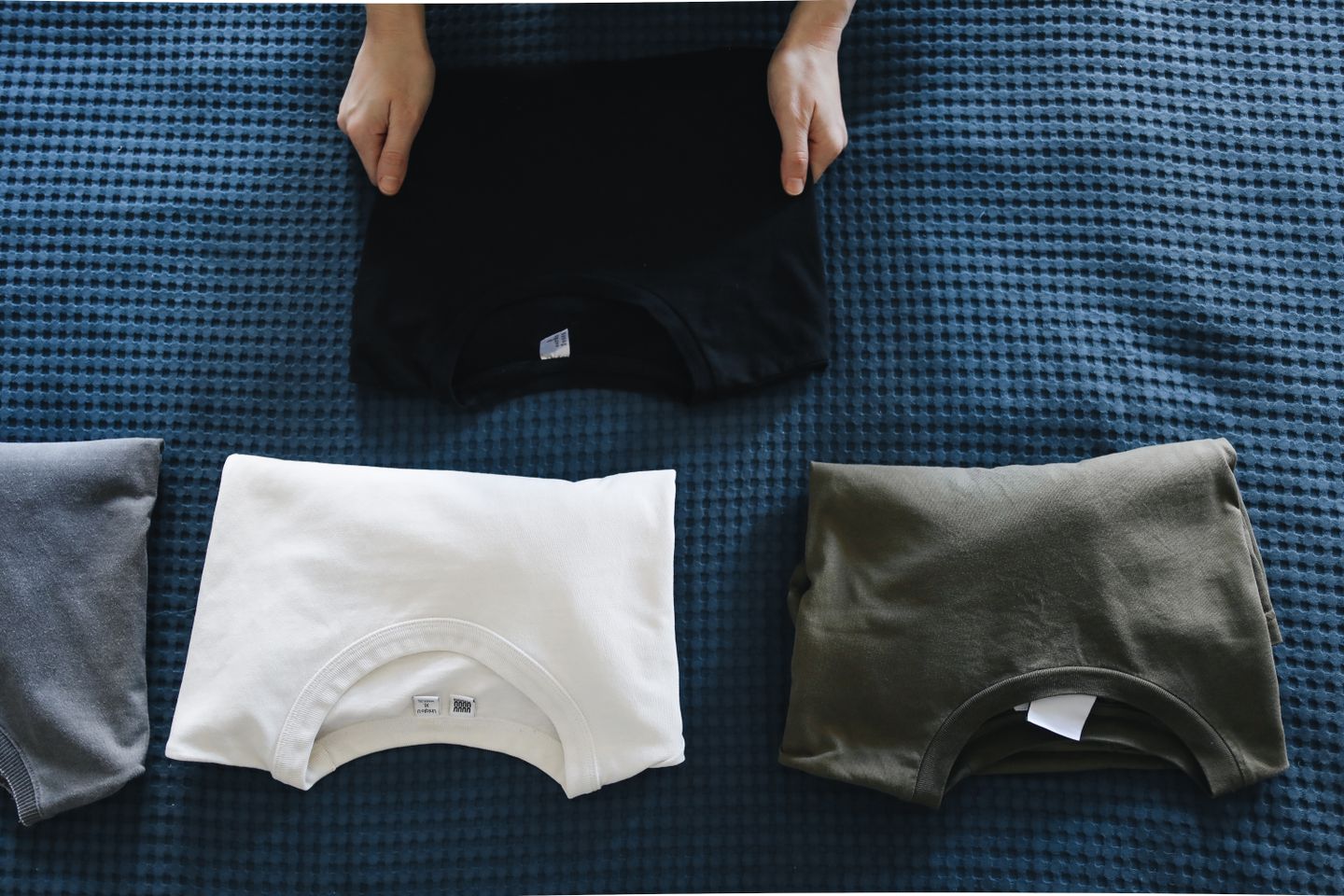
A vacuum bag is not a universal choice for coats, knits or filled clothing. Check the maker’s instructions and avoid compression when suitability is unclear. Choose folding or hanging for the actual construction and storage needs rather than treating every delicate fabric the same way. Do not overfill a container or strain its closure. Measure under-bed spaces with room for retrieval, and keep useful access and bed mechanisms clear. Containers should not become steps, seats or obstacles on the floor.
Put everyday clothes within comfortable reach
Group by the activity or type you use to choose an outfit. Labels can help; color coding is optional. Use existing hangers and dividers if they suit the garments and fit the furniture. Check drawer clearance, rail loading and shelf limits before adding accessories. Keep heavy items low enough to retrieve without unsafe lifting. Follow furniture anchoring instructions and resolve mounting and rental permission before adding hooks or organizers. A coordinated set is not a reason to replace workable storage.

Choose a few complete combinations before shopping
Use owned clothes to assemble outfits for your likely activities, including suitable shoes, layers and required work items. The number should reflect laundry and drying routines, not a capsule target. Notice whether a missing function is real before buying a duplicate. Check item measurements, care demands, construction and return terms for any purchase. A fabric name or higher price does not establish durability or comfort. The retained organizer links below are optional category searches, not verified fit, quality or availability.
Make the next change easy to reverse
Label stored items with contents and location, particularly anything you may need early. Keep a small review list rather than an automatic donation deadline. Revisit the arrangement when conditions or plans change and move useful clothes back into reach. Address dampness or pest signs instead of adding scent. Finish with clothing stored clean and dry, routes open and storage within its limits. A useful warm-weather rotation may involve only a few changes, not a complete seasonal wardrobe replacement.
Retained links and sources
- Optional Amazon category search: Velvet Hangers
- Optional Amazon category search: Shelf Dividers
- Optional Amazon category search: Shoe Rack
- Easy Closet Organization Ideas for Small Spaces
- How to Declutter Clothes in 5 Simple Steps
- Shoe Storage Ideas for Small Space Living
- CPSC: secure storage and furniture anchoring