Your Essential Bathroom Declutter Checklist
Shopping links: These links open Amazon search results. They are optional browsing suggestions, not verified product reviews or price/availability checks.
A bathroom checklist for one area at a time
Start with a drawer, shelf or small section, leaving the sink, toilet and walking route usable. You do not need to empty every cabinet at once. Keep a clear place for the items you are checking, and keep children and pets away from medicines, sharp objects and cleaning products. This checklist focuses on usable storage, not a promise of calm or a fixed completion time.
1. Separate the decisions
Create small groups for keep here, move to suitable storage, check before use and release through the right route. Do not put medicines, sharps or leaking products into a general donation or rubbish pile. Ask before sorting another person’s belongings. Do not handle an unidentified substance to make space; find suitable advice first. Keep items in their original packaging so warnings and product details stay with them.
2. Check cosmetics individually
There is no universal one-year expiry rule for every cosmetic. FDA says shelf life varies with the product, use and storage, and eye-area products can have shorter lives. Read the manufacturer’s directions and any opening-period or expiry information. If you cannot establish whether a product is usable, ask its maker or a pharmacist as appropriate rather than testing it on your skin. Do not add water to dried mascara or assume a normal smell proves a product is safe.
3. Keep sunscreen and medicines distinct
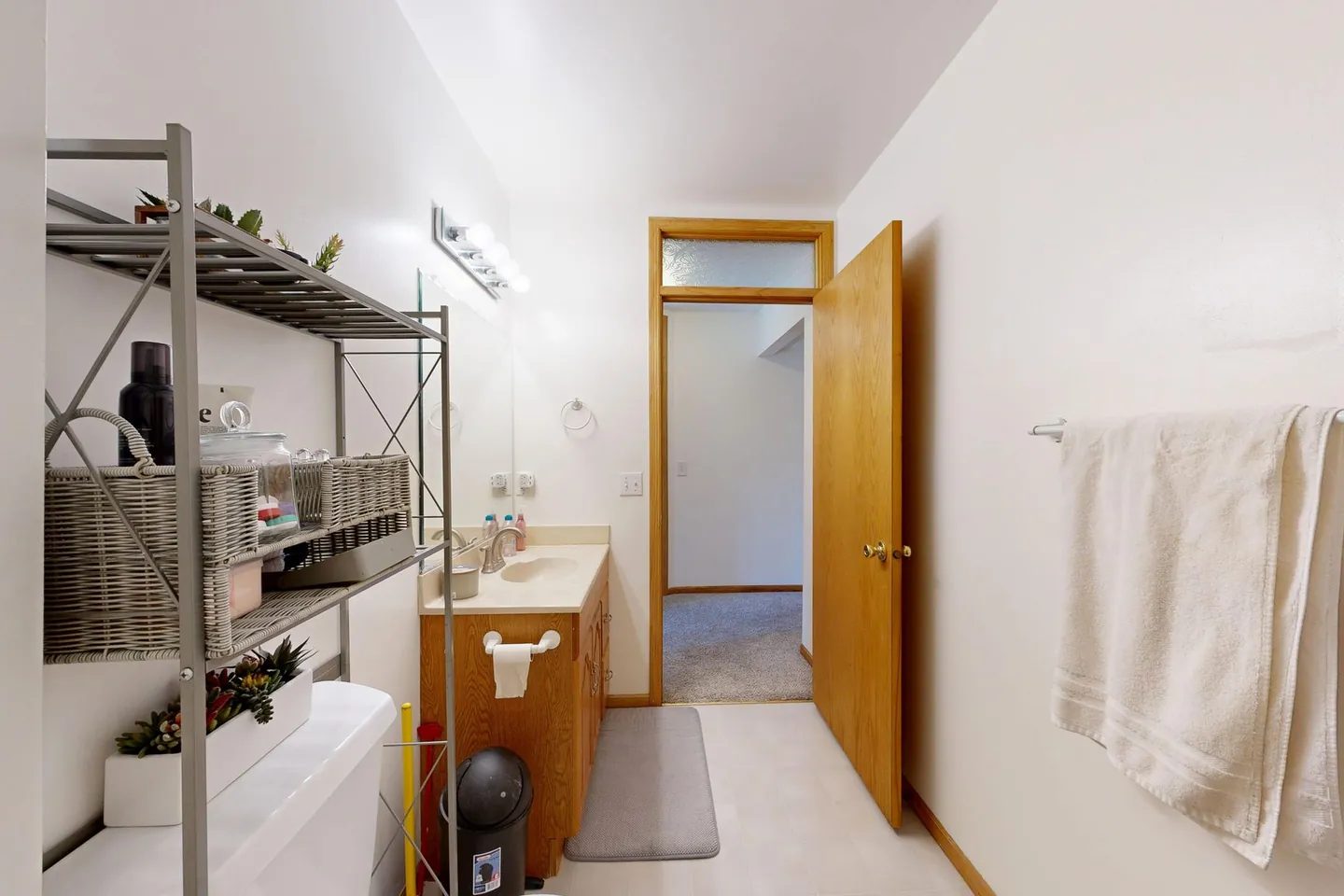
Follow the actual sunscreen label. For U.S. products, FDA says not to use expired sunscreen; without an expiry date, consider it expired three years after purchase, and discard it if its age is unknown. Medicines have their own storage, expiry and disposal directions. A damp bathroom cabinet may be unsuitable even for unexpired medicine. Ask a pharmacist about the actual product and local take-back options. Do not put medicines in a general toiletries donation bag or assume every medicine can be flushed.
4. Do not combine half-used products
Keep shampoo, lotion, cosmetics and medicines in their own labeled containers. Even similar-looking products may differ, and combining them loses information about age, ingredients and use. Decide whether each container is still needed and usable without topping one up from another. Keep closures secure. Set uncertain items aside safely for a specific check, not a month-long experiment that automatically ends in reuse or donation.
5. Clean the space using compatible instructions
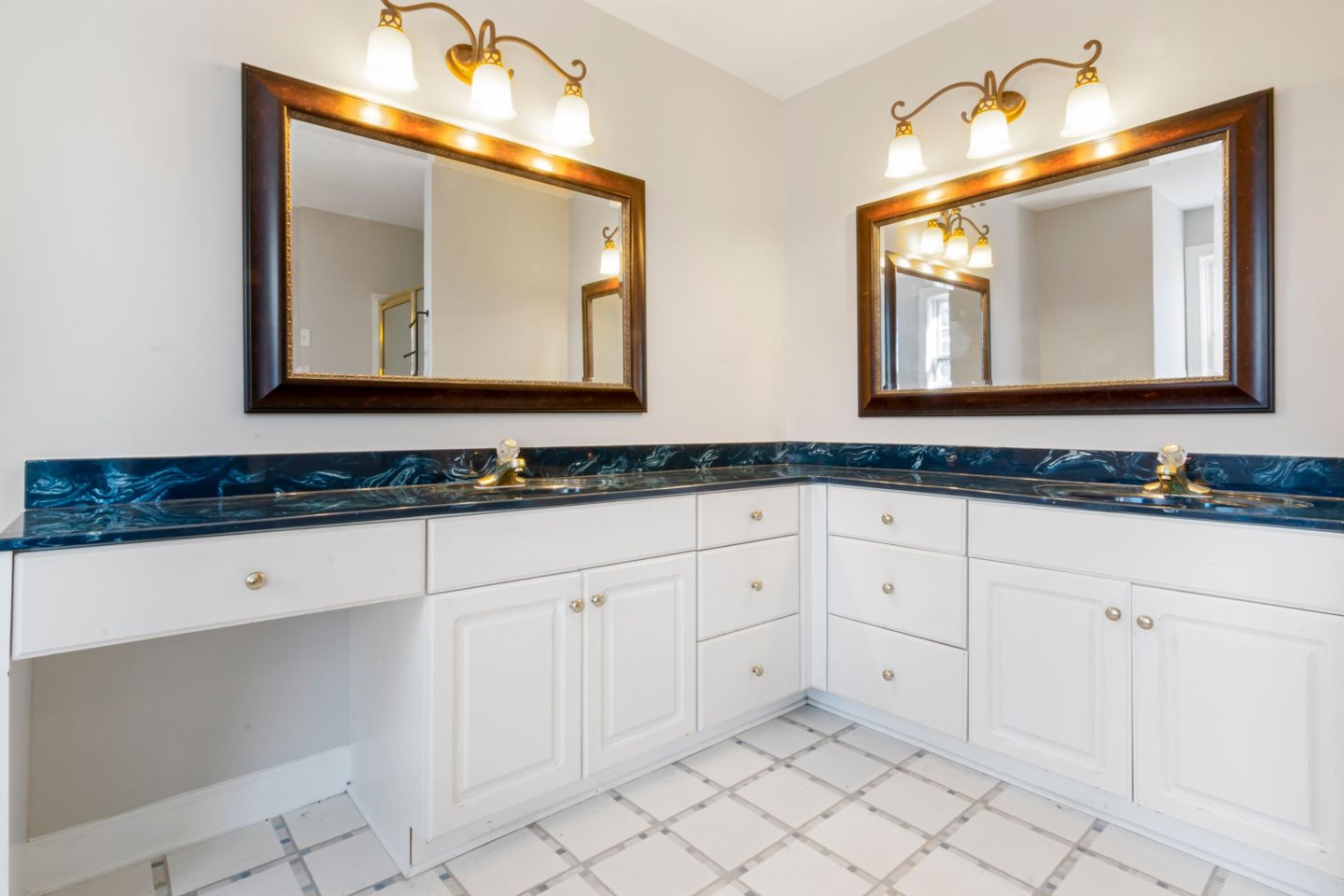
Choose a cleaner suited to the actual finish and follow both the product label and surface-care guide. Avoid a generic all-purpose product on every material. CDC distinguishes cleaning from disinfecting; disinfect only where appropriate, after cleaning, with the full labeled wet contact time. Follow ventilation, protection and rinse instructions. Do not mix cleaning products. Let surfaces and storage pieces dry as directed before returning belongings.
6. Choose towels around real use
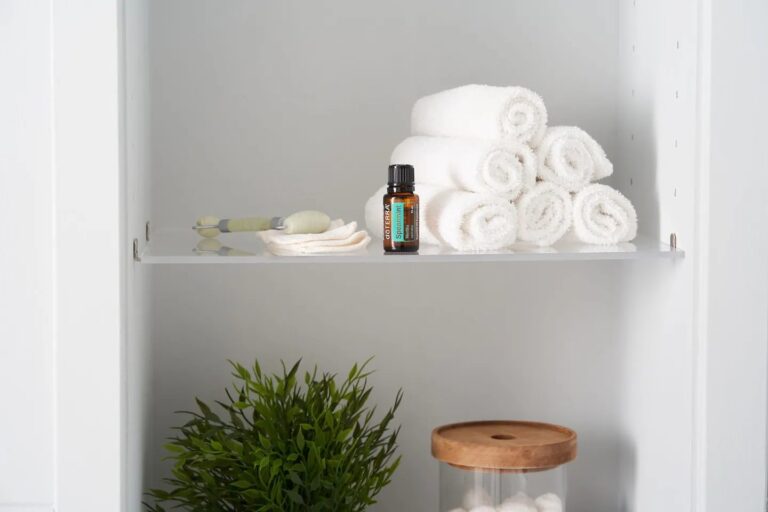
Keep enough towels for the household, laundry access and any care needs. Two sets per person is not a requirement. Place dry towels where they stay dry, and keep used ones separate. Before offering old towels to a shelter or charity, check its current acceptance rules; need and condition standards vary. Do not add hooks or racks until you know the mounting method, surface suitability, permission requirements and loaded weight.
7. Store by access and risk
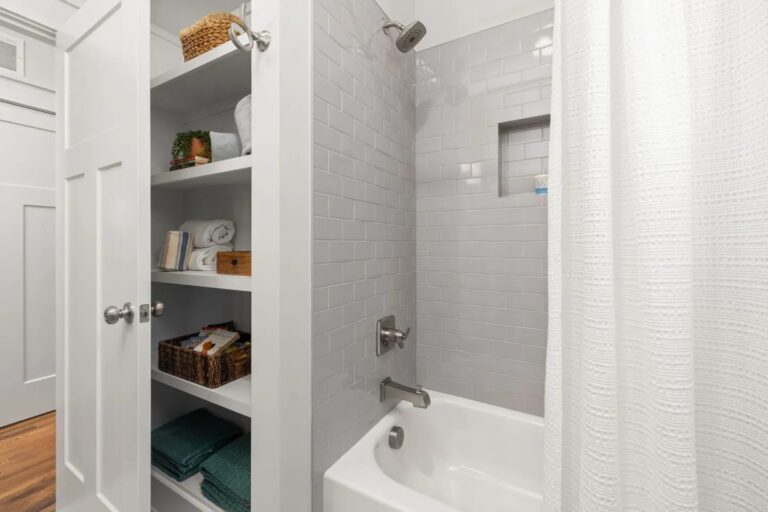
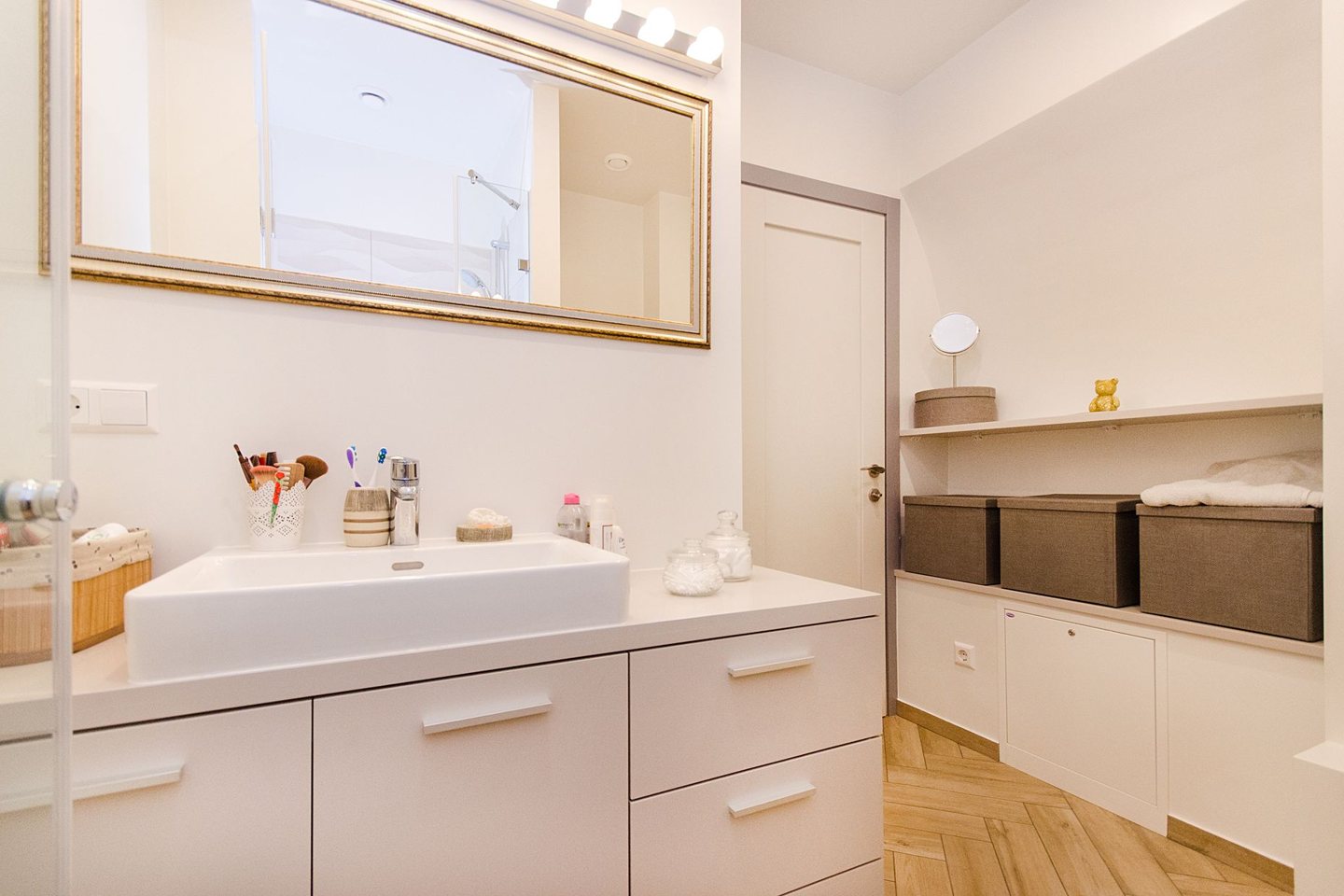
Keep everyday toiletries easy to reach, with medicines stored according to their own requirements. Secure cleaners and sharp objects separately from toothpaste, soap and children’s supplies. CPSC recommends locks and latches to help prevent access to hazardous items, including products in child-resistant packaging. An open under-sink bin is not secure chemical storage. Keep storage clear of plumbing and leaks; do not block maintenance access.
8. Buy only for a measured gap
Try existing containers first. Any over-toilet unit, door rack or caddy needs a check of stability, installation, clearances and the actual product’s instructions. No-drill and rust-proof are not claims established by the retained Amazon category links. Leave hot tools unplugged and cooled as their instructions require before suitable storage. Finish by securing outgoing items, returning keepers and checking that doors, drawers and routes work normally.
Retained links and sources
- Optional Amazon category search: Shower Caddy
- Optional Amazon category search: Over Toilet Storage
- Optional Amazon category search: Cabinet Organizer Bins
- 10 Bathroom Cleaning Hacks Every Mom Needs to Know
- Small Bathroom Storage Ideas to Maximize Space
- How to Organize Your Bathroom Cabinet Like a Pro
- CDC home-cleaning guidance
- CPSC: furniture anchoring and secure storage
- FDA: cosmetics shelf life
- FDA: sunscreen storage and expiry
- FDA: medicine expiry, storage and disposal