Weekend Bathroom Declutter Checklist You Can Follow
Shopping links: These links open Amazon search results. They are optional browsing suggestions, not verified product reviews or price/availability checks.
Choose a bathroom section you can finish
A weekend bathroom declutter does not need to empty every surface or finish within a few hours. Choose one shelf, drawer or product category and keep the room usable while you work. Have a suitable place for items you temporarily move, with medicines, cleaners and sharp tools secure from children and pets. This checklist is a planning guide, not medical advice or a promise of stress-free mornings.
1. Clear a small surface and check its care instructions
Move only what you can safely return before stopping. Keep electrical equipment away from water and do not place a mixed pile on the floor. Clean the cleared area with a method compatible with its material, following the product label and required ventilation. Do not mix cleaners or assume your usual multipurpose spray suits every surface. Return suitable items when the surface is ready rather than leaving a whole-room sorting job open.
2. Review medicines separately
Keep medicines in their original labeled containers and follow their storage directions. FDA advises not using expired medicines; do not treat an unopened packet or normal appearance as proof that an expired medicine is usable. Ask a pharmacist about an uncertain medicine or any treatment decision rather than stopping it because it occupies space. Use an appropriate local medicine take-back or disposal route. Do not put all medicines in ordinary trash or flush them by default.

3. Check cosmetics and sunscreen by the product
There is no universal mascara, lipstick or powder expiry timetable that this guide can apply to every product. FDA explains that cosmetic shelf life varies with the product and its use and storage. Follow the manufacturer’s guidance and discard products that have changed in a concerning way. Do not share cosmetics or add water to revive them. In the U.S., sunscreen is regulated as a drug; follow its expiration and storage directions rather than treating it as an ordinary lotion.
4. Keep usable toiletries without forced quotas
An almost-empty bottle or duplicate is not automatically waste. Decide what the household actually uses, keeping needed specialist products and the owner’s preferences in mind. Do not combine leftovers into one bottle or remove the original labeling to make a matching set. Recycle empty packaging only through the local route that accepts it, with any preparation required. Do not assume a charity can accept opened toiletries or make a donation handoff without checking its current rules.

5. Match towels to real laundry needs
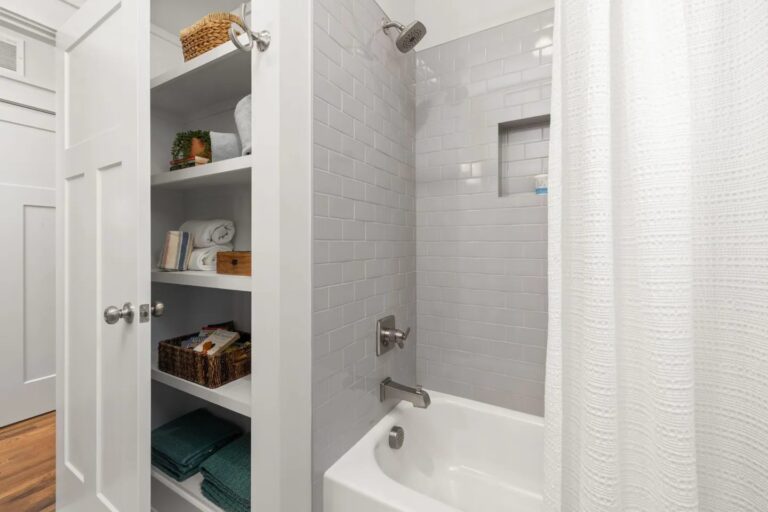
Choose quantities around the people using the bathroom, laundry access, guests and care needs. Two towels per person is not a rule. Wash and dry linens according to their labels and household requirements. Worn towels may have a useful cleaning role if suitable; do not assume every shelter wants them. Check an intended recipient’s acceptance rules before setting anything aside for donation. Fold in a way that fits the shelf without creating a heavy unstable stack.
6. Keep under-sink access and product safety separate
Check for leaks or dampness and leave access to plumbing and shutoff valves. Do not hide a repair need behind a basket. Store medicines, chemicals and electrical tools only where their instructions and household access controls allow. A clear bin is not secure storage. Keep cleaning products separate from personal-care items and in their original packaging. Keep hot grooming tools in a suitable adult-controlled cooling area before storing them as directed.

7. Give small items a suitable home
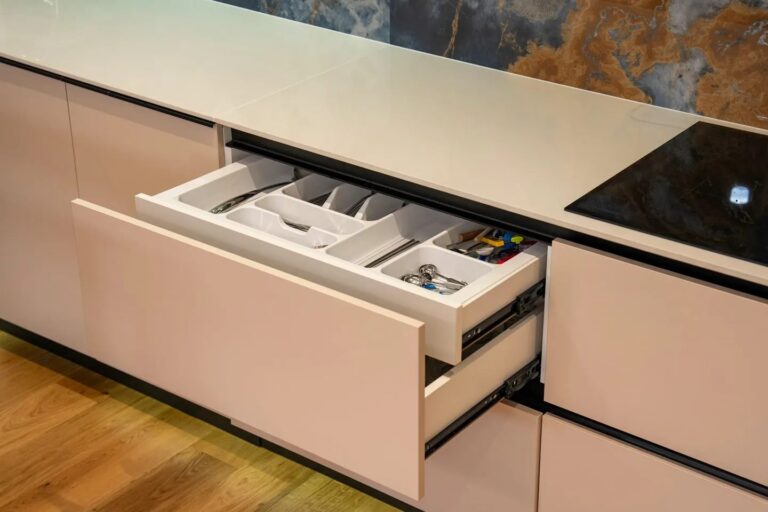
Use a smooth intact tray or divider for appropriate everyday items, while keeping razors, nail tools and small accessories securely stored according to the household. Avoid dumping an unknown drawer into a bag where sharp objects can be hidden. There is no need to discard something solely because it was unused for six months or to remove one useful item for every new arrival. Ask the owner and review uncertain items in a contained group.
Finish the section before adding organizers
Return the chosen contents, close cabinets, secure hazardous products and leave the floor clear and dry. Measure a specific storage gap before shopping. The retained caddy, over-toilet and bin searches are optional categories, not verified rust-proof or no-drill products. Follow fitting, loading, anchoring and rental requirements for anything added. A usable shelf and one completed disposal decision can be enough for this weekend.
Retained links and sources
- Optional Amazon category search: Shower Caddy
- Optional Amazon category search: Over Toilet Storage
- Optional Amazon category search: Cabinet Organizer Bins
- 10 Bathroom Cleaning Hacks Every Mom Needs to Know
- Small Bathroom Storage Ideas to Maximize Space
- How to Organize Your Bathroom Cabinet Like a Pro
- CPSC: secure storage and furniture anchoring
- FDA: cosmetic shelf life and expiration dating
- FDA: expired medicines
- FDA: sunscreen storage and expiration