Kids Bathroom Organization Checklist for Clutter-Free Space
Shopping links: These links open Amazon search results. They are optional browsing suggestions, not verified product reviews or price/availability checks.
Separate child access from adult storage
A child’s bathroom can be organized without making every item reachable. Start by deciding which belongings a child can use with supervision and which must remain adult-controlled. Medicines, cleaning products, razors, sharp grooming tools and small items do not belong in an open child-height drawer. An attractive labeled bin does not make them safe. This checklist is a planning aid, not a substitute for supervision or a complete home-safety assessment.
Check the room before sorting
Keep the floor and route to the door clear and deal with slippery water promptly. CPSC guidance says to supervise young children constantly around bathing and stay within reach. Never leave a child in the bath while you collect a towel, empty a drawer or take a call. Gather what the adult needs before bathing starts. Keep access to toilets and other water hazards controlled as appropriate for the children in the home.
Sort a small section with an adult present
Review one shelf or drawer rather than emptying chemicals and medicines onto an accessible floor. Keep products in their original labeled containers. Check their instructions and condition; almost empty does not mean unsafe, and seldom used does not mean unnecessary. Do not combine leftover toiletries to save space. Keep prescribed or specialist products until the responsible adult has checked what is needed. Follow suitable local disposal guidance for medicines and hazardous products.

Create a small daily-care zone
Choose a limited place for the toothbrush and other items used in the supervised routine. Follow dental-product age and supervision directions instead of treating all toothpaste or floss picks as interchangeable. Separate people’s belongings in a way they can understand. A picture label may help identify a spot, but it does not establish permission to use everything nearby. Return adult-controlled products to secure storage as soon as the task is finished.
Keep the cleaning zone separate
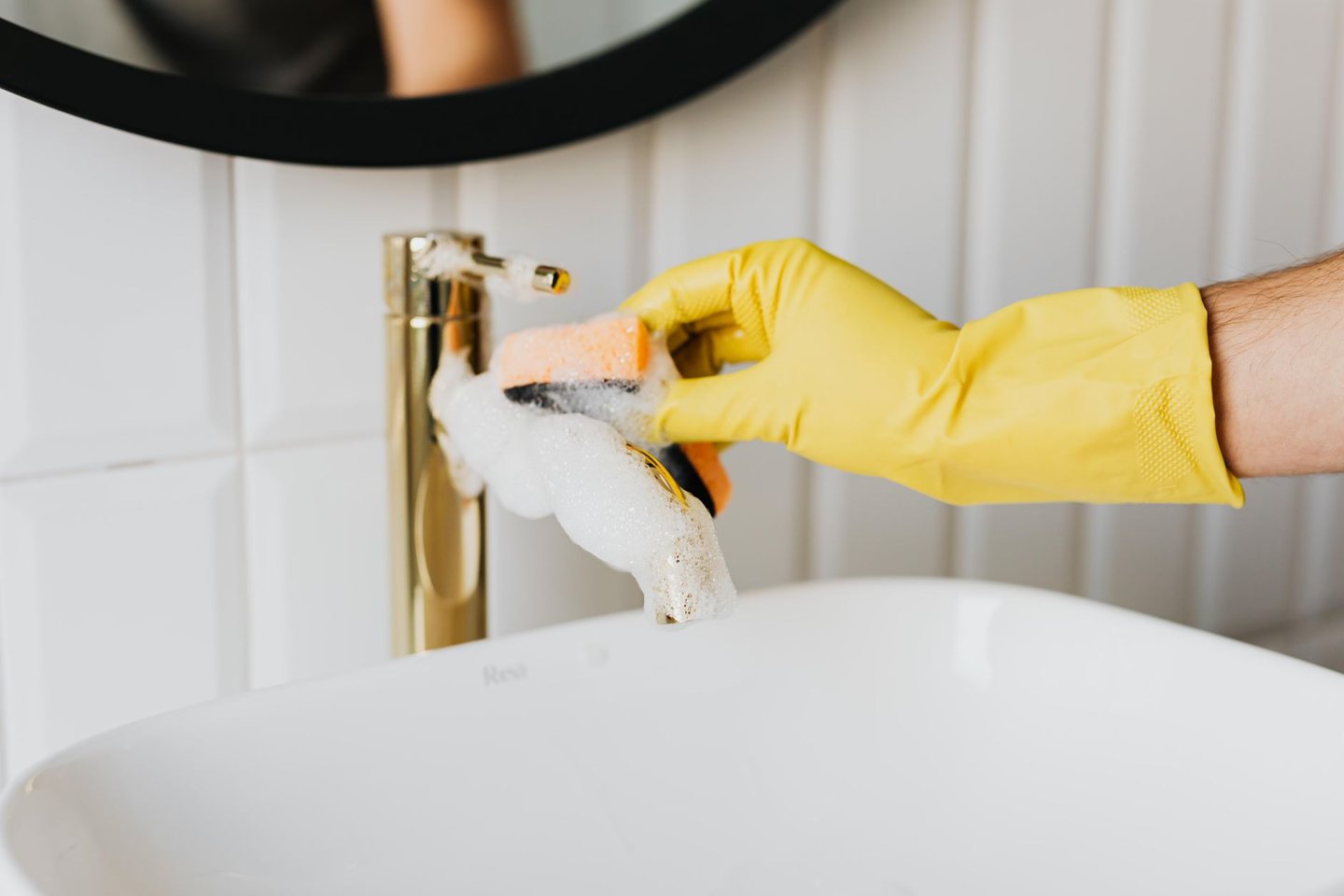
Store cleaners securely away from children, food and personal-care items. Do not group cleaning sprays with child-height towels simply because both relate to bathroom upkeep. Keep child-resistant packaging closed, while remembering it is not childproof. Adults should handle cleaning products according to their labels, with the required ventilation and no mixing. A child can help return a towel or put away a suitable item without being handed a spray bottle or disinfecting wipe.
Choose reachable storage with limits
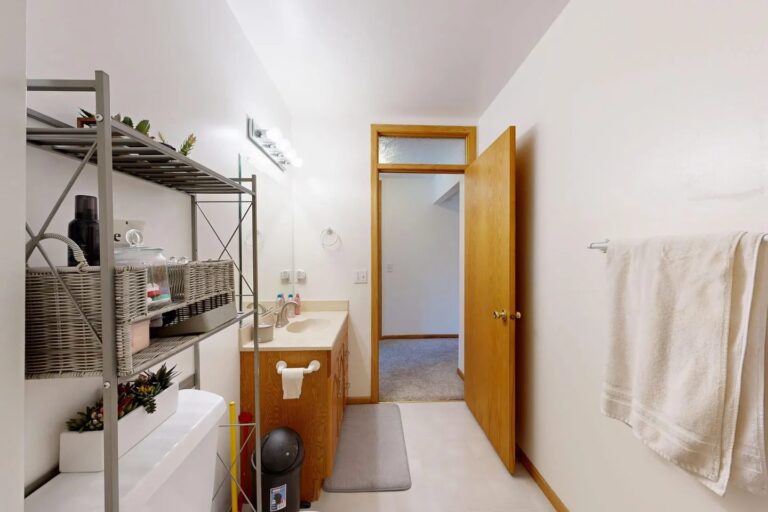
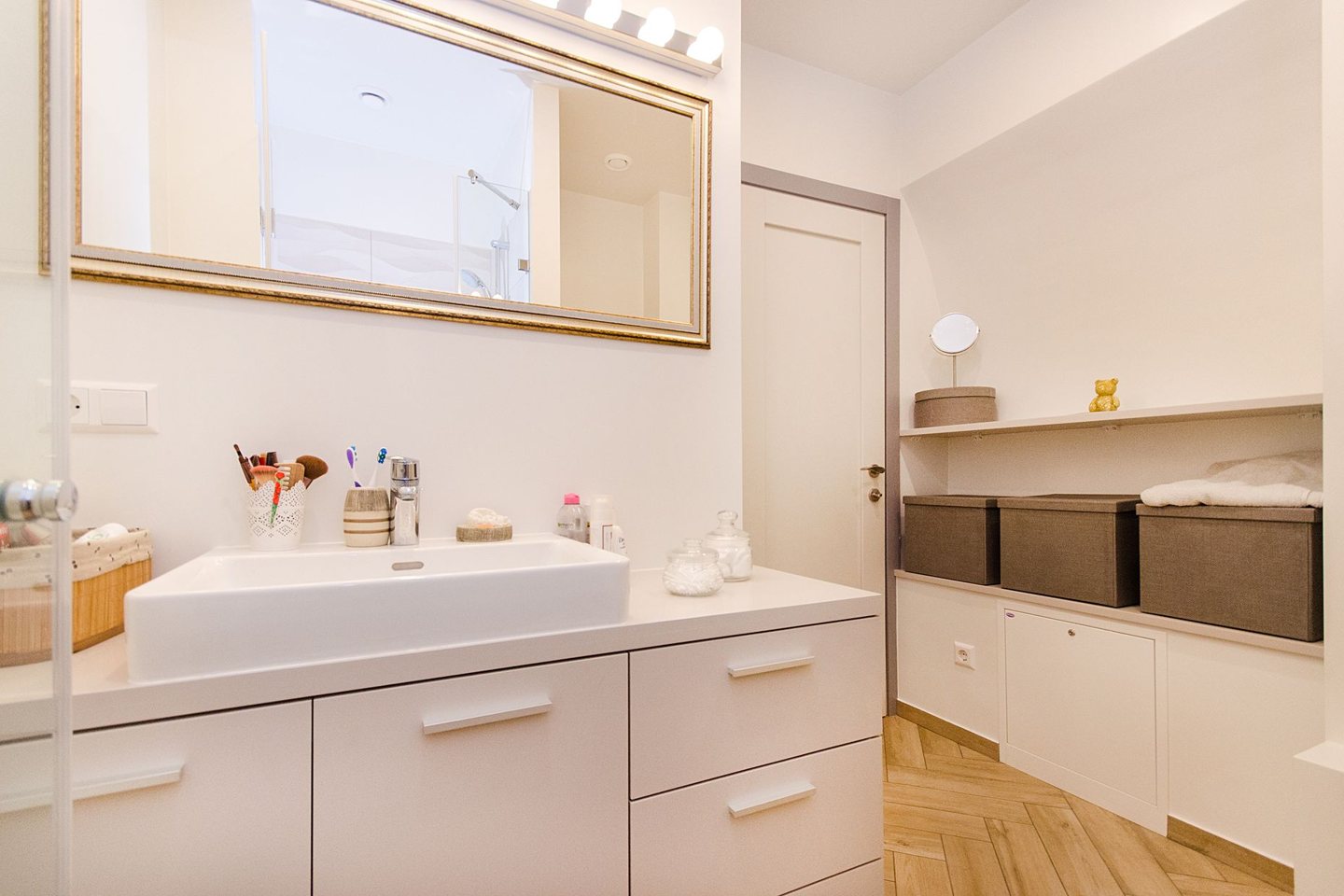
Use a small suitable tray rather than filling the entire counter with containers. Avoid glass and check for sharp edges, pinch points and small detachable parts. Keep heavy items low and do not create a stack a child may pull down. Drawer dividers must suit the contents and users; a muffin tin is not automatically a safe substitute. Medicines and sharp tools need secure adult storage regardless of whether a transparent container makes them easy to see.
Do not turn walls and doors into climbing invitations
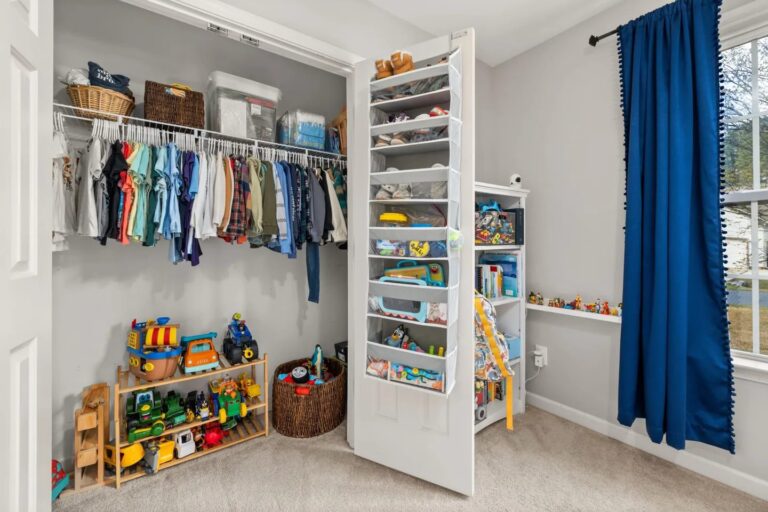
Check load limits, installation instructions, wall construction and rental permissions before adding hooks or shelves. Do not rely on suction cups or adhesive to hold heavy items or control access to hazards. An over-door organizer must not stop the door closing or put dangerous products within reach. Keep shelves and hanging cords away from the bath and children’s climbing routes. More vertical storage is not a requirement for a usable bathroom.
Dry and inspect bath items
Choose age-appropriate toys and follow their cleaning and drying instructions. Let suitable items drain and dry in a place that does not create a slip hazard or obstruct bathing. Rotation is optional, not a way to make a contaminated or damaged toy usable. Remove damaged items from play and check the manufacturer’s guidance when water cannot be drained or cleaning is uncertain. Keep spare toys stored dry and inaccessible to children who should not have them.
Keep electrical equipment away from water
CPSC’s home electrical checklist warns that plugged-in bathroom appliances can be hazardous even when switched off. Follow the appliance’s instructions and unplug and store it safely after use, allowing hot equipment to cool in a suitable adult-controlled area. Do not create a charging station beside the basin or bath. Any outlet protection or wiring concern belongs with a qualified electrician, not a storage hack.
End with a simple supervised reset
Return the suitable daily items, hang a towel where it can dry safely and leave the floor clear. Do not race to clean a wet bathroom. Review the setup as the children grow and their access changes. The retained toy-bin and wall-organizer searches are not verified bathroom-safety products. Use existing suitable storage first. The goal is a clear routine with adult control of hazards, not independent access to the whole room.