Organizing Kids Books: Ideas for Small Spaces
Shopping links: These links open Amazon search results. They are optional browsing suggestions, not verified product reviews or price/availability checks.
Choose a small, usable book collection first
Start with the books your child uses now and a storage location that fits the room. A low basket or suitable bookcase may be enough. This guide does not claim that a particular layout increases reading or development, and it does not report personal product tests. Match access to the child’s age and abilities, with appropriate supervision.
1. Check furniture before filling it
Follow the maker’s assembly, load and anchoring instructions. CPSC warns that bookcases and other furniture can tip when children climb or pull on them. Low furniture is not automatically exempt from anchoring requirements. Use suitable hardware for the furniture and wall. If a rental restriction prevents required installation, resolve it before using the setup rather than substituting an unsupported adhesive fix.
2. Put everyday books where climbing is unnecessary
Choose a small selection and a suitable accessible location. Keep heavier books low and within the storage unit’s limits. Leave enough room to take one book out without pulling down a stack. Store adult-only or delicate books separately. Do not place tempting books high on furniture as a way to encourage children to reach for them.

3. Treat wall shelves as an installation decision
A spice rack is not automatically a tested bookshelf. Check the intended use, dimensions, load, fixings and wall before repurposing anything. Keep shelves and stored objects away from infant sleep spaces and places where falling items could hit a child. Do not assume a row of floating shelves beside a bed is appropriate simply because it saves floor space.
4. Try a suitable open bin before a lidded bench
Check that the container is sound, stable and appropriate for the child’s use, without sharp edges or loose parts. A heavy-lidded storage bench or ottoman is not a default children’s book bin; use only products intended for the setting and follow their instructions. Check secondhand furniture for recalls and missing hardware rather than treating a low price as proof it is suitable.
5. Rotate books only if it helps your household
Keep favorites available and store overflow in a suitable location adults can manage. There is no required two-week schedule. Include library books in a clearly marked return area and keep a note of their actual due dates. Rotation changes what is visible; this article does not claim that it increases reading or makes old books feel new to every child.

6. Keep the reading area separate from infant sleep
For an older child, choose appropriate seating with a clear walking route. Cushions and other soft items do not belong in an infant’s crib or bassinet. CPSC recommends keeping cribs, beds, furniture and toys away from windows and window-covering cords. Do not create a reading corner that doubles as a route to a window or cord.
7. Check door storage before loading it
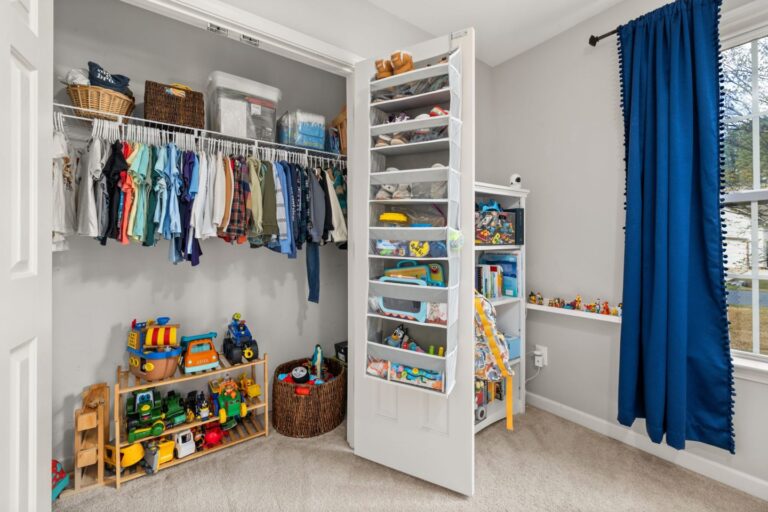
Use a door organizer only if its instructions support the contents and load and the door still works normally. Books can be heavier than the items a pocket was designed to hold. Keep hanging loops and loose straps inaccessible where they could pose a hazard. Do not block an exit or make the child climb to reach an upper pocket.
Make returns easy and review what stays
Use simple words or pictures to identify each book location. Agree on donations or storage with the child and keep borrowed books separate. The retained photos are room illustrations, not approved installation examples. Optional Amazon searches below are not tested recommendations; a wall command center is not required for storing books. Start with a measured need, not a new purchase.