Practical Ideas for Baby Nursery Organization
Shopping links: These links open Amazon search results. They are optional browsing suggestions, not verified product reviews or price/availability checks.
Plan the nursery around care, not extra storage
Start with the supplies your caregivers use and the space you actually have. A nursery can be a separate room or an area of a shared bedroom. This guide offers storage decisions, not tested products or a promise about sleep, stress or parenting confidence. Keep the infant sleep space separate from storage and decoration.
1. Keep the sleep space bare
CPSC advises a firm, flat sleep surface in an appropriate infant sleep product that meets applicable requirements, with nothing but its fitted sheet. Place babies on their backs for sleep. Do not store pillows, blankets, toys, baskets or feeding cushions in the crib or bassinet, even temporarily. An organized room does not replace infant-care guidance.
2. Check equipment before sorting accessories
Read the instructions and check for recalls before using new or secondhand nursery equipment. Keep model information and assembly instructions available. A dresser is not automatically a changing table, and an improvised topper does not establish compatibility. Use furniture only for its intended purpose and within the maker’s limits. Set aside uncertain equipment until you can verify it.

3. Divide clothes by current use
Sort clean clothes by type and the size your baby currently wears. Keep the next size in a separate labeled location, rather than crowding the active drawer. Existing dividers may be enough; check for loose or sharp parts. Keep drawers closed after use. Anchor dressers and other furniture as instructed, using suitable hardware and installation.

4. Prepare a caregiver-only changing kit
Keep the supplies needed for a change within the caregiver’s reach before starting, while keeping creams, medicines, sharp tools and small parts inaccessible to children. A portable caddy is storage, not a childproof container. Return it to secure storage after use. Never leave a baby unattended on a raised changing surface to fetch a missing item.

5. Keep storage away from sleep and climbing routes
Do not add shelves, hanging organizers or cords over or within reach of the infant sleep space. CPSC recommends moving cribs and furniture away from windows and window-covering cords; cordless coverings remove that cord hazard. Secure furniture and install storage according to its instructions. Do not assume adhesive hooks provide the required support or anchoring.
6. Give other caregivers a simple map
Label clothes, clean linens and backup supplies in words the caregivers understand. Store blankets outside the sleep space. Keep feeding equipment according to its own preparation, cleaning and storage instructions; this article does not provide a feeding or sterilization protocol. Leave walking routes and doorways clear instead of filling every gap with another basket.
Review the setup as your baby grows
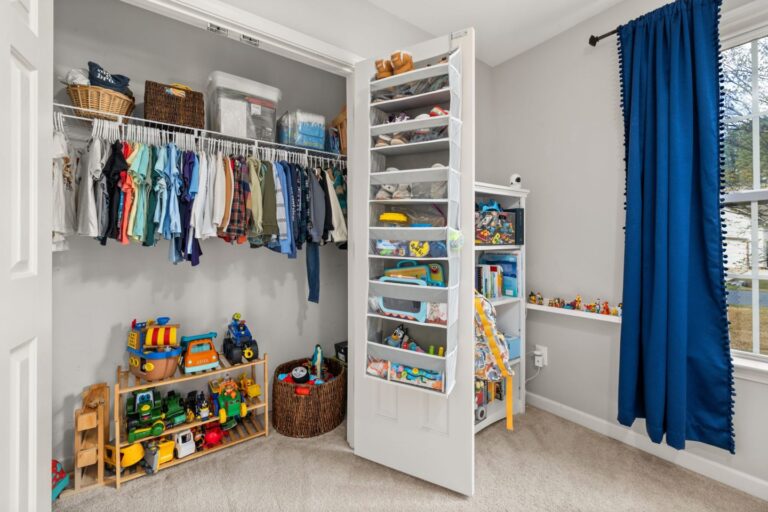
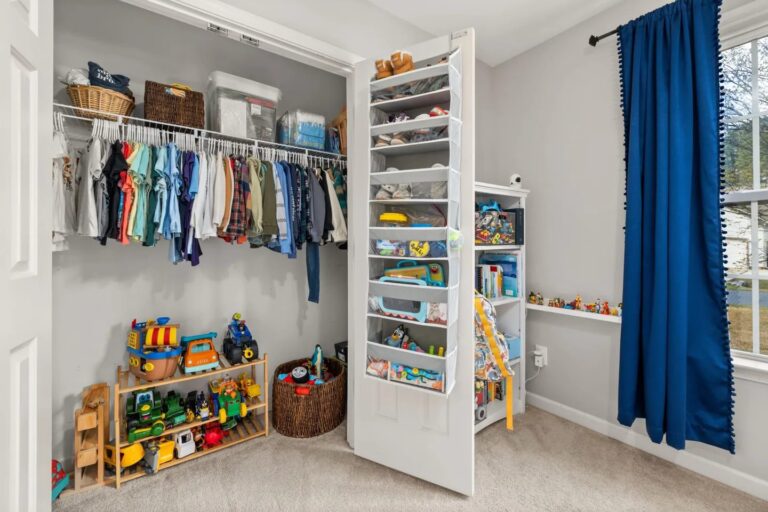
Recheck access when a child begins reaching, rolling or climbing. Inspect storage for loose fittings and keep small objects secured. Rotate age-appropriate toys if that suits the household, without claiming it improves development. The retained photos illustrate rooms, not approved infant-sleep arrangements. Optional category links below are not a nursery shopping list or verified safety endorsements.