Seasonal Kids Room Organization Tips for Spring Cleaning
Shopping links: These links open Amazon search results. They are optional browsing suggestions, not verified product reviews or price/availability checks.
Review the room for the season your family is entering
A seasonal tidy is a chance to check clothing sizes, school materials, toys and storage. It does not need to happen in spring everywhere, and a tidy room is not a treatment for stress or a proven way to improve creativity or focus. Start with one category the household needs to find more easily.
1. Set up a small sorting area with an adult
Take out one drawer or toy category rather than emptying the whole room. Separate items to keep, repair, review and potentially pass on. Adults should check broken pieces, batteries, sharp objects and recalled products before children join in. Do not make a child handle unknown cleaning products or loose small parts as part of a sorting game.
2. Agree on what stays
Ask which clothes still fit and which books or toys the child uses or wants to keep. Set sentimental items aside for a separate decision instead of imposing a compulsory one-in, one-out rule. Check donation requirements and product condition before passing anything on. An unwanted or recalled product is not automatically suitable for another family.

3. Match access to age and supervision
Keep appropriate everyday items where the child can use them without climbing. Store small parts, batteries, sharp tools and other adult-controlled materials securely. For crafts, follow age labels and the activity’s supervision needs. A low bin is a storage choice, not proof that its contents are safe for unrestricted use. Keep medicines and cleaners locked away in original packaging.
4. Check the furniture before filling it
Follow assembly, load and anchoring instructions for dressers, shelves and storage furniture. CPSC warns that children can pull or climb furniture and cause tip-overs. Low furniture is not automatically exempt. Do not use a heavy-lidded ottoman or storage bench as a default toy box. Resolve required wall fixings with the landlord rather than replacing them with an unsupported adhesive solution.

5. Keep sleep, windows and walking routes clear
CPSC recommends keeping cribs, beds, furniture and toys away from windows and window-covering cords. Use cordless coverings where young children are present. Keep infant sleep spaces free of storage and soft objects. Leave doorways and routes through the room usable instead of filling every empty patch with bins or a rolling cart.
6. Try broad labels before buying more containers
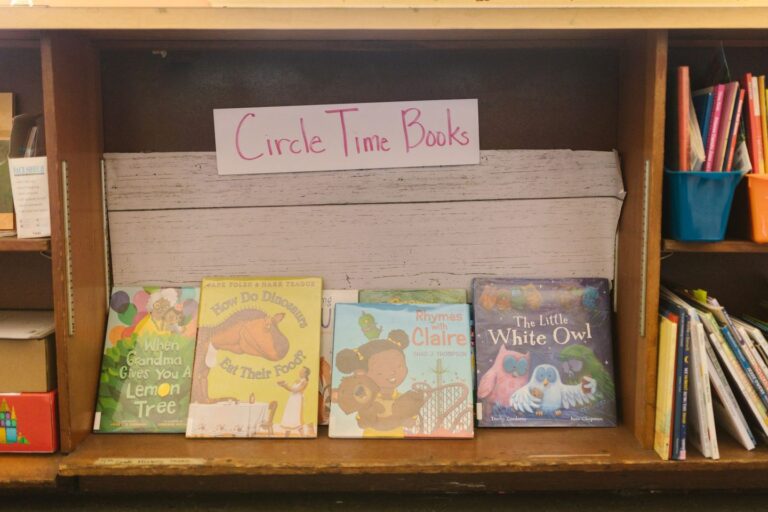
Use a few categories such as current clothes, books and suitable toys. Words or pictures can identify a location, but they do not guarantee the child will tidy independently. Measure any gap before choosing a container and check its contents, load and installation needs. Existing suitable storage may be enough; more organizers are not the goal.
7. Review the setup when needs change
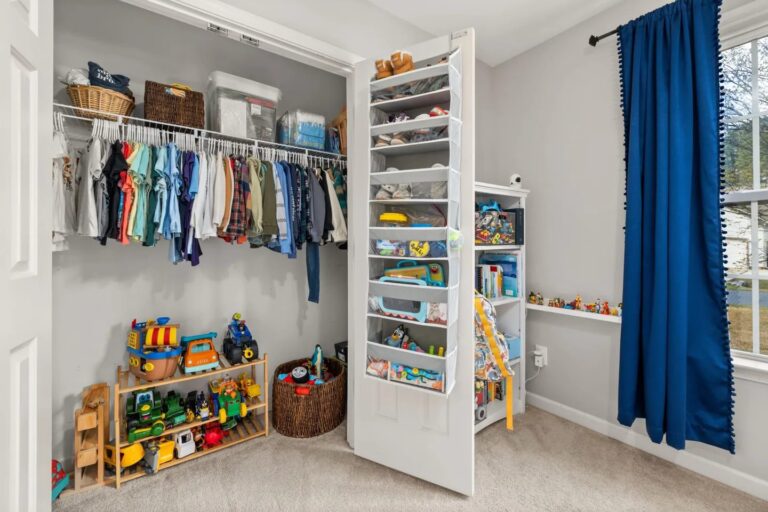
Rotate toys or books only if that helps the household; no fixed monthly schedule or developmental benefit is claimed. Check for damaged storage, loose fixings and newly reachable hazards as children grow. Retained room photos are illustrations, not approved safety layouts. Optional category searches below are not product tests or a requirement to buy a new bookshelf or family command center.