Clever Toy Organization Ideas for Every Playroom
Shopping links: These links open Amazon search results. They are optional browsing suggestions, not verified product reviews or price/availability checks.
Organize the playroom around its users
Toy organization starts with the ages and needs of everyone who can enter the room, including younger siblings. A system that works for an older builder may put small pieces within a toddler’s reach. Read toy age guidance and decide what can stay accessible, what needs an adult handoff and what should be stored elsewhere. You do not need every toy visible at once or a full set of matching containers.
Clear routes before making categories
Keep doors, windows needed for escape and walking routes usable. Move only a small group of toys at a time so the room can be put back into use between sessions. Look for damaged toys, loose parts and packaging, separating anything that needs an adult decision. Follow recall or manufacturer instructions where relevant rather than repairing a toy by guesswork. Do not leave plastic packaging bags or loose small items in the sorting area.
Group broadly enough for cleanup
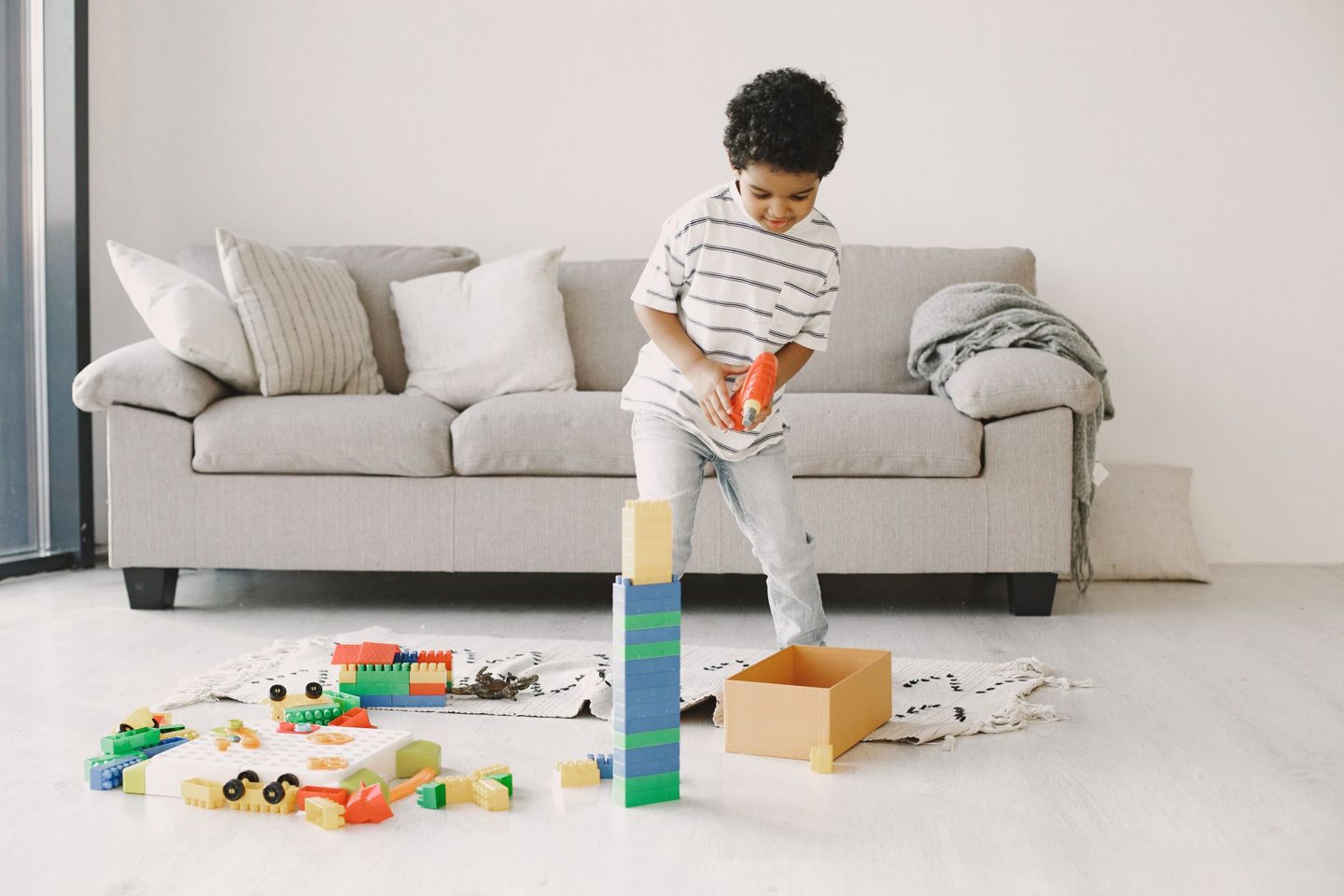
Try a few categories such as large building toys, pretend play and puzzles. Keep small-part sets separate from toys for younger children. CPSC advises following age recommendations and keeping older children’s toys away from younger ones. A broad bin may work well for some toys, while a puzzle may need its own container. Avoid claiming that one mixed bin makes play impossible or that detailed sorting is always better. Test the categories with the people using them.

Choose containers for safety and handling
Use suitable, intact storage that the intended user can manage without heavy lifting or sharp edges. Visibility is optional; a clear container does not itself protect against choking or other hazards. Avoid glass jars and check handles, latches and removable parts. Large lidded boxes, storage benches and trunks can create entrapment, suffocation or lid injuries. Do not repurpose an adult storage chest as a child’s toy box simply because it also provides seating.
Keep furniture stable and accessible
Follow furniture assembly and anchoring instructions, keep heavy items low and avoid placing sought-after objects where a child must climb. A low bookshelf can still tip, so height is not a substitute for checking its installation. New shelves, pegboards and hanging bins need suitable fixings, loading and placement; they are not the default fix for a full floor. Check rental requirements before drilling and choose another arrangement when required safe installation is not possible.
Use activity areas without building barriers
A reading spot and a place for building can share the same room and surface at different times. Keep sightlines and walking routes clear rather than using unstable shelving as a divider. Check rugs for trip or slip problems. Art tools, adhesives and small craft items need their own age-appropriate access decisions, not an open basket solely because the area is called an art zone. Adult supervision remains necessary for the activities that require it.
Rotate only when it helps the household
Agree which toys stay available and where the rest can be stored safely. No fixed monthly schedule is necessary. Keep favorites and comfort items in the discussion rather than hiding them to meet a quota. Rotation can reduce what is out at once, but it is not a guarantee of better concentration or renewed interest. Check that stored toys remain dry, intact and suitable when they return to use.
Make labels describe the real system
Use pictures, words or both on the categories you actually keep. Place labels securely without introducing small loose decorations. Ask a child to try returning a few suitable toys and adjust the category if the destination is unclear. A label identifies a place; it is not a safety lock or proof that a toy belongs with that age group. Keep adult-controlled storage separate rather than expecting a younger child to obey a sign.
Finish the handoffs, not someone else's belongings
Have the owner or responsible adult decide about donations, completed builds and treasured toys. Do not donate something merely because it has not been used recently. Check recipients’ current acceptance rules and do not pass on recalled, unsafe or incomplete items as usable toys. Keep outgoing items safely contained and away from exits until the handoff is arranged. A temporary review box can preserve a difficult decision without leaving it scattered through the room.
Review before buying more storage
Watch what repeatedly gets left out and whether its home is too high, too heavy or hard to open. Try moving one suitable container before purchasing anything. The retained Amazon searches are optional categories, not product tests, safety approvals or proof that higher prices mean better construction. Keep furniture, small-part access and lidded-storage risks ahead of appearance. A small set of usable categories and a safe reset can be enough.