Small Kitchen Storage Products: What to Look For
The best small-kitchen storage product is the one that fixes a specific access problem without taking up more useful room than it adds. This guide compares organizer types to help you choose. It is not a hands-on product test or a ranking of currently available Amazon listings, and it makes no claims about live prices, stock, or brand performance.
Disclosure: These links open Amazon search results. They are optional browsing suggestions, not verified product reviews or price/availability checks.
Measure and remove the obvious clutter first
Choose one problem, such as inaccessible pans or a drawer full of loose utensils. Remove items that belong elsewhere and identify duplicates you no longer need. Measure the remaining contents and the space around them before browsing.
For cabinets, note internal width, depth, height, hinges, and door clearance. For drawers, include usable height above the contents. For wall or door products, check material, mounting permissions, and load requirements. Keep these measurements beside you when reading a product listing.
1. Adjustable under-sink organizers
These may create separate levels around plumbing, but ‘adjustable’ does not mean universal. Measure the pipes, shutoff valves, disposal, and door opening. Leave maintenance access clear. A removable tray can be simpler than a full shelf system when the cabinet is cramped or prone to leaks.
Keep products in their labeled containers and follow child-safety requirements. Do not store food beneath a sink alongside cleaning chemicals.
2. Over-the-door pantry racks
A door rack can hold a modest amount of lightweight pantry stock without using a shelf. Check the door thickness, hook clearance, mounting instructions, and load rating. Confirm the door closes without jars striking the frame or shelves.
Avoid turning every pocket into deep storage. If the rack makes the door difficult to move or hides package labels, a smaller rack or fewer items is the better choice.
3. Under-shelf or hanging baskets
A slide-on basket may use the gap below a shelf for napkins, wraps, or other light items. Measure shelf thickness and the space needed above and below its clips. Check that the shelf and basket can support the intended load.
Do not assume a pantry basket is suitable for refrigerator use. In a fridge it must suit the environment, remain washable, and leave vents and door operation clear.
4. Stackable food containers
Choose food-contact containers that fit the portions and shelves you use. Check the particular container and lid instructions for dishwasher, microwave, freezer, or oven use. A brand name alone does not establish leak resistance, drop resistance, or suitability for hot food.
Try a small set before replacing every container. Standardized shapes may make stacking easier, but too many sizes and lids can recreate the original problem.
5. Magnetic spice storage
Magnetic racks can free a small shelf if the mounting surface is compatible. Check the product’s loaded weight limit and the appliance manufacturer’s restrictions. Keep racks away from heat, steam, vents, controls, and doors that could knock them loose.
Some refrigerator finishes are not suitable magnetic mounting surfaces. Verify compatibility rather than buying on appearance alone.
6. Shelf risers
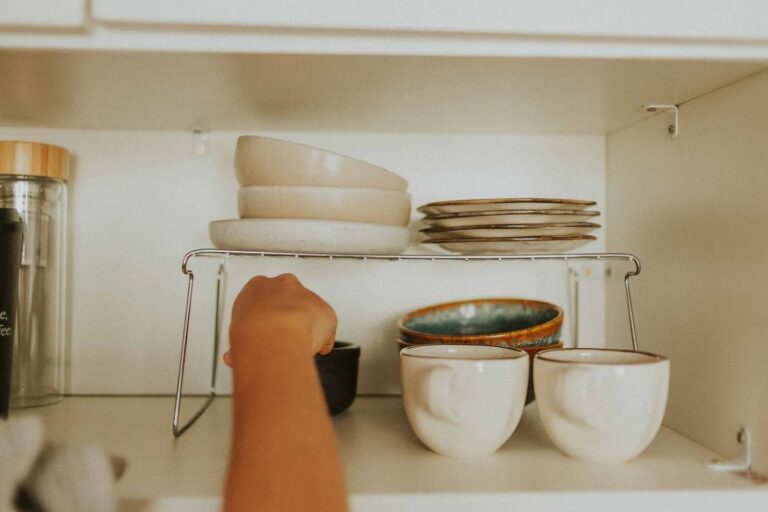
A riser can separate short stacks of dishes or food packages. It does not automatically double capacity: its legs and upper shelf consume space too. Compare its footprint and loaded height with your cabinet, and check stability on the existing shelf.
Keep heavy cookware low and do not build a tall, unstable stack. If the cabinet has adjustable shelves, changing their positions may solve the problem without a purchase.
7. Pull-out cabinet trays
A sliding tray can make a deep base cabinet easier to reach. It may also reduce internal width and require drilling. Check the opening, hinges, handle clearance, mounting surface, weight rating, and installation instructions for the specific model.
Do not assume installation takes a fixed amount of time or needs only one tool. If drilling, confirm there are no concealed services where fasteners will go and use appropriate help when needed.
8. Roll-up sink racks
A rack spanning part of the sink can create a temporary drying area. Measure the sink opening and support edges, and check the loaded capacity and material care. Confirm it can sit securely without interfering with the faucet.
Use it as a food-preparation surface or heat trivet only if the manufacturer expressly permits that use. Store it dry when finished rather than adding a permanent obstacle to the sink.
9. Drawer dividers and inserts
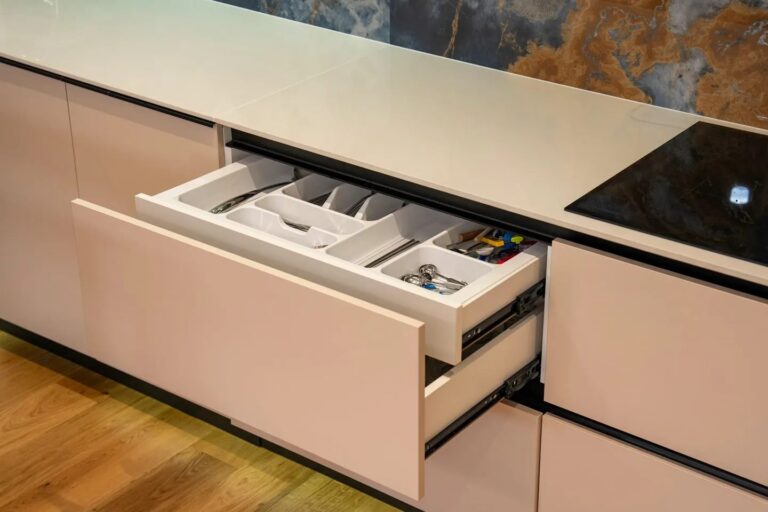
Choose dividers that fit the drawer’s internal dimensions and leave enough room for its slide mechanism. Expandable models still have minimum and maximum ranges. Use a small number of categories and keep frequently used tools in front.
For knives, use storage intended to cover and secure blades rather than leaving them loose among utensils. A divider should make retrieval safer as well as tidier.
10. Wall shelves

Wall shelves can hold selected light items when the wall and fixings support the planned load. Check rental restrictions, hidden wiring or plumbing, mounting instructions, and clearance from cooking appliances. Use suitable anchors or professional installation when required.
Avoid placing heavy or breakable items above a busy work surface simply to use an empty wall. Shelves also create an extra surface to clean, so they are not the right answer for every small kitchen.
Make one deliberate purchase, or none
The existing Amazon search links below are browsing routes, not selected tested products. Compare exact dimensions, care, mounting, return conditions, and total price on the current listing before deciding. Skip a product when a shelf adjustment, smaller collection, or existing tray solves the problem.
Test the new layout during ordinary cooking before adding another organizer. Easy access and easy cleanup are better measures of success than filling every available inch.
Amazon category searches
Optional browsing links. Check the specific listing, dimensions, materials, instructions, and current terms before buying.
Related reading
- Kitchen Organization Ideas to Maximize Space
- Simple Pantry Organization Hacks for Small Spaces
- Best Small Kitchen Storage Solutions You Need
How we choose (and what we do not claim)
We compare organizer types by the space they save, how they mount, and whether they come down clean at move-out. We check the maker’s stated weight limits and the renter-safety of the mounting method, not lab tests. This guide is not a hands-on test of specific products; where we say a type is a good or bad fit for renters, that is about how that kind of organizer behaves in small rental kitchens, not how one brand performed in our own kitchen.
Questions renters ask
Are adhesive organizers safe on tiles and paint? On smooth, clean tile they usually hold well. On painted drywall, strong adhesive strips can lift paint when removed, so a freestanding shelf or an over-the-cabinet-door rack is the safer pick.
Do I need my landlord’s permission? For anything drilled into walls or cabinets, yes, ask first. Adhesive, tension and freestanding organizers normally do not need permission because they leave the surface unchanged.
What if something leaves a mark? Test a small hidden spot first, and keep the original fittings so move-out is easy.